Colombia’s Ugly Architecture of Inequality
Cali, Colombia, is among the most unequal cities in the world. The story of its inequality is written in its architecture, replete with sprawling favelas, fortified luxury homes, and intimidating bunkers that belong to cartel bosses and police alike.
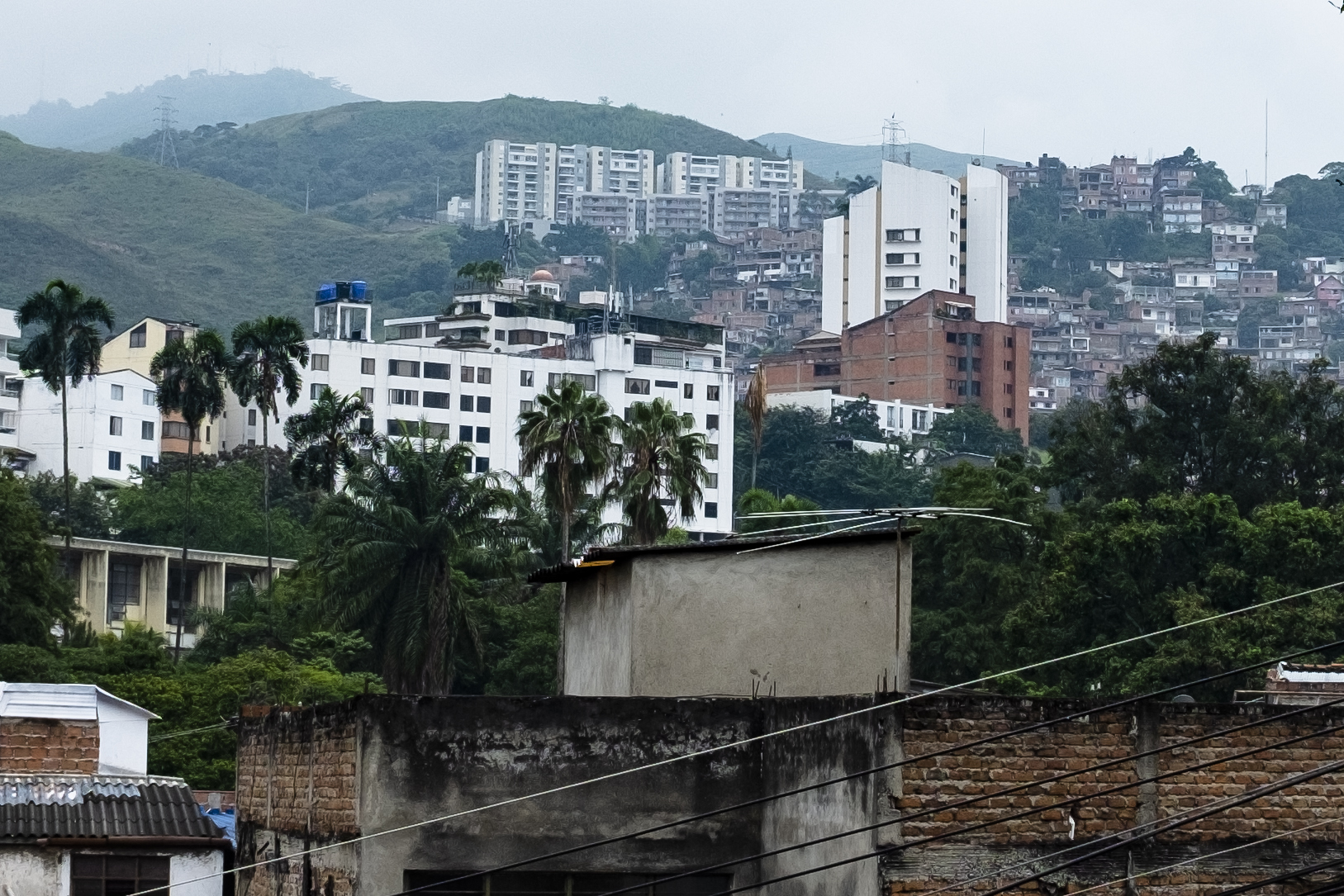
Favelas and condos decimate nature as they creep ever higher up the foothills of the Andes Mountains. (Courtesy of the author)
When a national strike broke out in Colombia earlier this year, bringing thousands into the streets to protest the country’s social and economic model, images and videos were broadcast around the world. The root causes of the protests were less discussed in the international media, however. The demands of the protesters to halt government reforms that would gut pensions and the public health system and raise taxes for the working class were actually quite modest, given that Colombia has some of the highest economic and social inequalities in all of the Americas, and also some of the highest levels of violence (including state-sponsored violence).
Colombia has been at war with itself for over fifty years. The government has been fighting guerrillas while mostly ignoring (or even aiding) heavily armed criminal organizations that produce and distribute cocaine and also terrorize marginal communities in a bid to appropriate their land. The violence of these armed groups has produced some of the largest numbers of internal refugees in the world. Over the past several decades, Cali, the third largest city in the country and the center of cocaine production, has absorbed a huge number of these displaced people, mostly of Afro-Colombian or Indigenous descent, exacerbating the already extreme levels of poverty, inequality, and crime that exist in the city.
Architecture of Inequality
The architecture of Cali is rooted in the city’s deep inequality. In Cali, a family’s social status is often measured by the height of its home. People in Cali thus tend to pile brick and cement cubes one on top of the other, regardless of the risks from earthquakes or from faulty design. Each floor added is a step up the social ladder, worth any possible safety risk.