The CIO’s Heyday Was the High Tide of the American Labor Movement
In the 1930s and ’40s, the Congress of Industrial Organizations unionized American workers with an energy never seen before. But its peak years were short-lived, and the labor movement has struggled to reach such heights again.
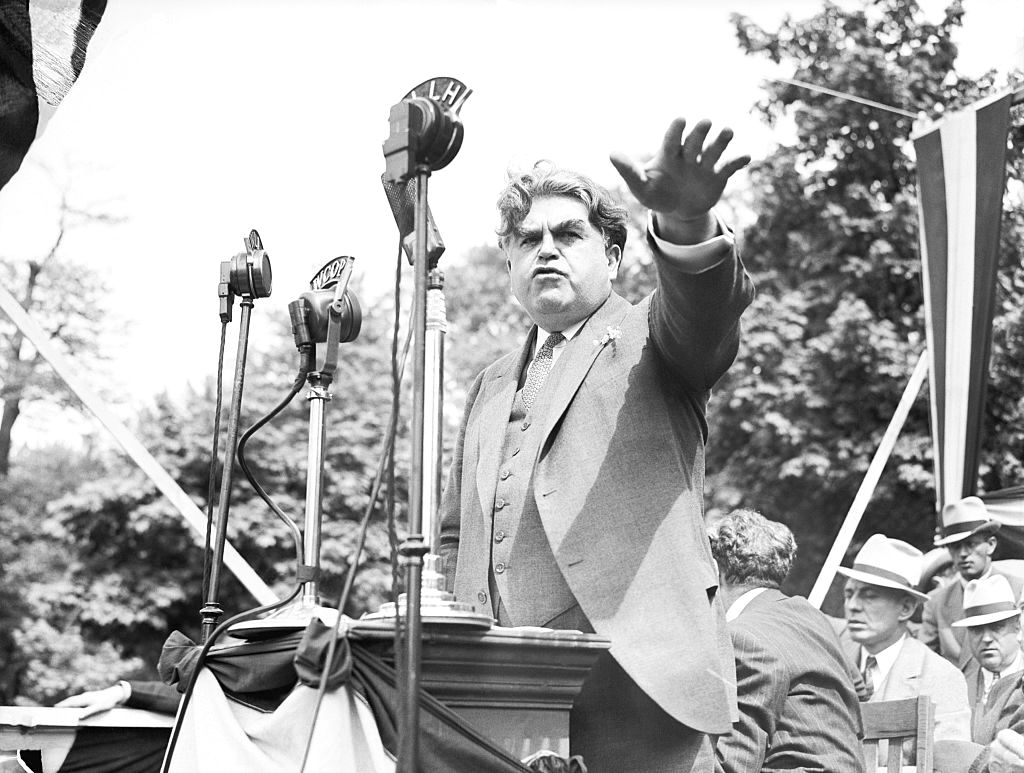
John L. Lewis, leader of the Committee for Industrial Organization, addressing 10,000 textile workers in Lawrence, Kansas, on May 24, 1937. (Bettmann / Getty Images)
What was the CIO? It’s not easy or simple. Essentially it was an attempt or effort to bring unionization to areas of the economy where in the past unions had a history of failure. Before the formation of CIO, unions had failed to organize any of the sectors of mass production in the US and, from the final decades of the nineteenth century into the 1960s, mass production was the dominant sector of the US economy. Automobiles, electronics, and steelmaking employed enormous numbers of workers, the vast majority of whom did what was labeled non-skilled or semiskilled labor. But all of the mass production sectors also had a substantial minority of highly skilled workers. Without their skills, production could not succeed.
Before CIO came on the scene in the second half of the 1930s, most union members had their power in what could be called the labor market. Their power came from their skills. Without their skills in construction in other sectors of the economy, production could not function. Power came from their position in the labor market. In the mass production sector, the vast majority of employees had no labor market power. They were all readily replaceable. Their power came not in the labor market but at the point of production.
How you organize people is related to the power they bring to the situation. In the mass production sector, power basically belongs to the employers except for the minority of highly skilled workers. So how do you organize workers without power in the labor market?