To Change Spain, the Left Needs to Rein in a Reactionary Judicial Establishment
Spain’s congress has voted in Socialist leader Pedro Sánchez for a new term as prime minister. His pact with left-wing Sumar and Catalan parties has withstood far-right violence — but must still overcome resistance from conservative activist judges.
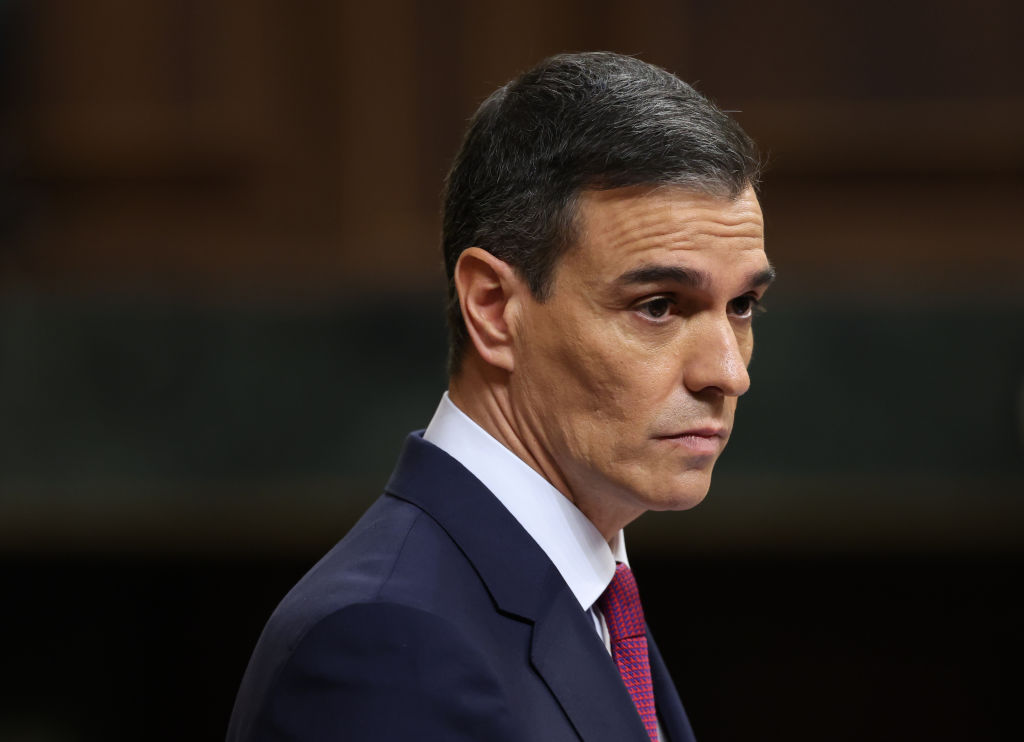
Spanish prime minister Pedro Sánchez speaks during the investiture debate at the Spanish parliament on November 15, 2023, in Madrid, Spain. (Isabel Infantes / Getty Images)
Ahead of Thursday’s parliamentary vote confirming him for a fresh term in office, Spanish premier Pedro Sánchez spoke of a divided country: “Like a hundred years ago, in times of intense change, there is a fierce ideological and political contest between reactionary and progressive alternatives.” Four months after July’s inconclusive elections, and amid ongoing far-right violence, Sánchez positioned himself as the progressive figurehead of a fresh pact between his Socialist Party (PSOE) and the radical-left Sumar. But this renewed coalition government would also have to be an anti-fascist bulwark: “Either democracy provides security or insecurity will kill democracy.”
In the streets of Madrid, the days leading up to the vote had been fraught. By the time the ex–Fox News anchor Tucker Carlson turned up in the Spanish capital on Monday, far-right protesters had already been laying siege to PSOE headquarters for ten consecutive nights. Marked by repeated violent clashes with the police and the display of openly fascist symbols, the protests were ostensibly targeting a sweeping amnesty law for the Catalan independence movement — legislation that the Spanish right has hyperbolically framed as an existential threat to the country’s constitutional order. Arriving with far-right Vox leader Santiago Abascal, Carlson took aim at Sánchez, telling Spanish media, “Anyone who would violate your constitution to end democracy is a tyrant.”