The Defeat of Public Energy in Maine Isn’t Reason for Despair
Earlier this month, Maine’s voters rejected a referendum for publicly owned energy after a disinformation campaign led by the energy lobby. But in the US, ordinary people have beaten these interests in the past, and they can do so again.
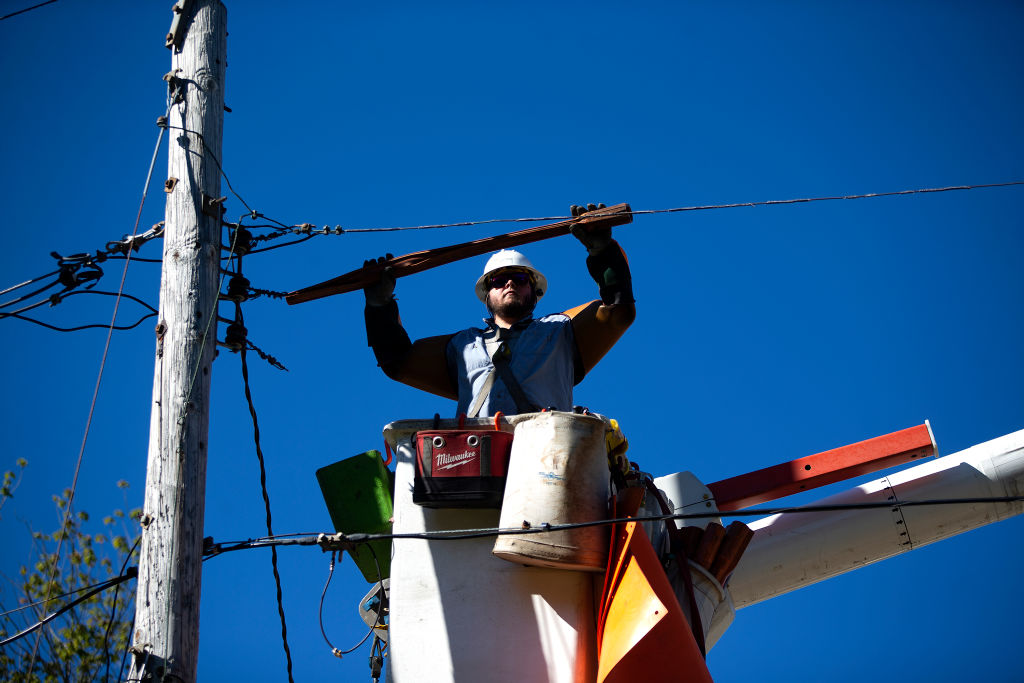
A line worker with Central Maine Power transfers power lines from an old utility pole on September 2, 2022 in North Yarmouth, Maine. (Derek Davis / Portland Press Herald via Getty Images)
Earlier this month, the people of Maine decisively said no to publicly owned energy. If they had voted yes on Question 3, which was on the ballot on November 7, they would have authorized their state to take over Central Maine Power (CMP) and Versant, the two major private electric utilities in the state, and replace them with the consumer-owned Pine Tree Power Company. Instead, following a massive propaganda blitz by CMP and Versant, Mainers rejected Question 3 by a seventy-to-thirty margin.
In 2021, Pine Tree Power did not even make the ballot after Democratic governor Janet Mills vetoed a bipartisan bill to put the question to a popular vote.
Opponents of the bill made several assertions in their attacks against Question 3. They argued that the legal wrangling following a successful takeover bid would be costly, that these costs would have to be footed by the taxpayer through a large public borrowing campaign, and that all of this would delay more pressing issues, such as addressing climate change. But ultimately, the lobby against the bill relied on the argument that political control over public energy utilities would lead to corruption and mismanagement.