Socialize the Grid
Energy companies are more concerned with raking in profits than delivering affordable, sustainable energy. We need to wrest control away from them — and socialize the electrical grid.
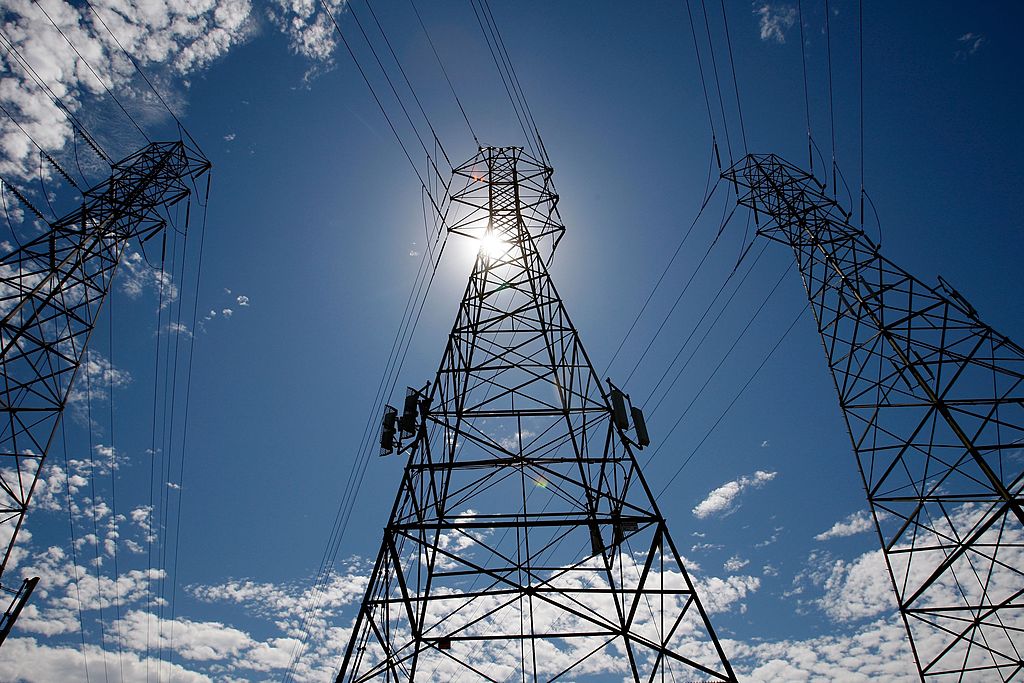
The sun shines over towers carrying electrical lines, August 30, 2007 in south San Francisco, California.Justin Sullivan / Getty
No market is less free than energy. Energy consumers have little choice in whether to turn on their heat or lights. They have even less say when it comes to who supplies their energy. In order to power their homes, the majority of US residents pays a privately owned utility monopoly and is forced to accept whatever rates and regulations that monopoly wishes to impose. By nature, an energy distribution model that prioritizes profit over resiliency, accessibility, and sustainability incentivizes utility corporations to cut corners, gauge prices, and eliminate competitors. Just as in health insurance, a profit motive for energy distribution is fundamentally at odds with the public good.
In health care, the consequences of the profit motive are obvious. Every year, scores of people in the United States die attempting to ration medication. Thousands more lose their lives from prescription drug overdoses. Hundreds of thousands file bankruptcy due to astronomical medical debt. Many of them die slowly from ailments for which they can’t afford treatment. It’s easy to connect the dots between private health insurance and its victims. Energy barons enjoy a degree of separation. Each year, a few of our neighbors die from residential gas line explosions, dozens more from wildfires and droughts, hundreds from heatwaves and hurricanes, hundreds of thousands from air and water pollution. In no minor sense, the existing energy system has deadly consequences, and we are politically, economically, and infrastructurally bound within it.
Theoretically, Americans can generate their own electricity. But utility profiteers have erected an array of barriers to limit our ability to do so. Say you want to install a photovoltaic system on your rooftop. You’re barred by law from exceeding a maximum size — and in many jurisdictions, this size is not based on the surface area of your roof or the capacity of your electric panel, but rather the amount of money you will save on your energy bill. In others, it’s an arbitrary kilowatt limit set by regulators or the utility. So even if you have a roof big and bright enough to power your whole block, the capacity limit prevents you from sending too much clean energy back to the grid.