Texas’s Energy Crisis Shows Why We Need to Reform Our Privatized Energy System
The recent meltdown of Texas’s energy grid during a spell of extreme weather made it extremely clear for everyone to see: a for-profit, free-market-oriented energy system is bound to fail massive numbers of people.
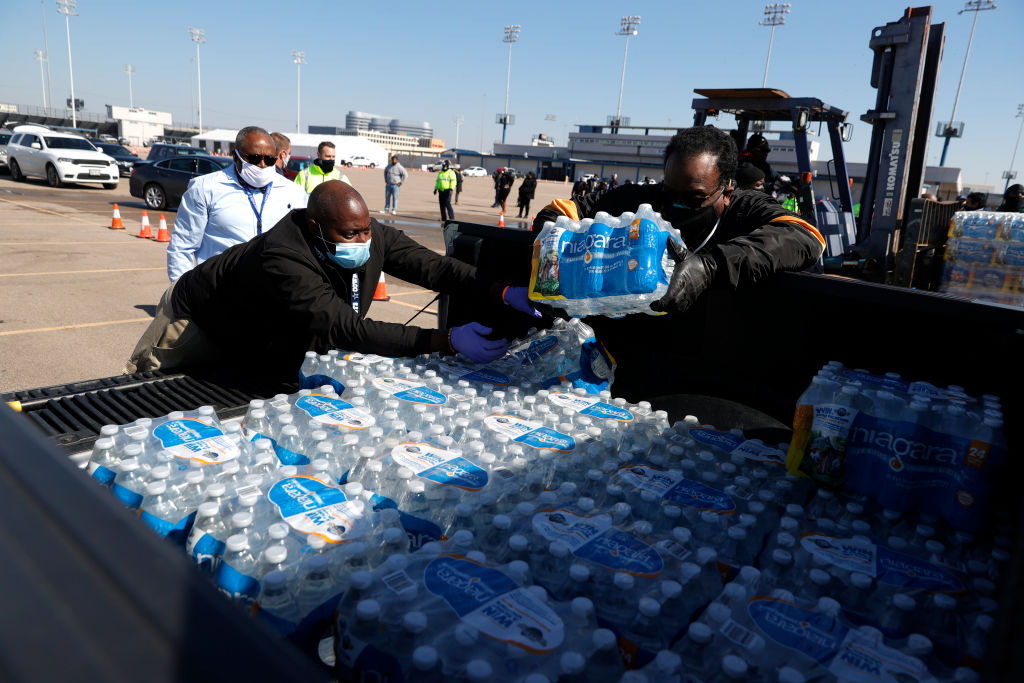
Volunteers load cases of water into the bed of a truck during a mass water distribution in Houston, Texas as people struggle with historic cold weather, power outages, and a shortage of potable water. (Justin Sullivan / Getty Images)
Texas residents will be spending the next few months recovering from one of the country’s most catastrophic collisions of extreme weather and extreme hubris. Not only was the state hit by a massive polar vortex created by fossil-fueled climate change, but by a meltdown and near-collapse of an electrical grid designed to maximize profits for private utilities rather than the needs of communities for reliable and green energy sources.
As Texas assesses the damage and what to do next, it is clearer than ever that Texas and the nation must confront the foundational flaw of our energy system: its prioritization of profits over people. This moment gives us no choice but to face the violence, racism, and climate emergency that our current energy system has bred and to reimagine a radically different system. As we saw in Texas, people’s lives are at stake.
Fossil Fueled Climate Chaos
The same fossil fuel infrastructure that created the conditions for the polar vortex that swept parts of the country this month buckled under its wrath, as a centralized and brittle dirty gas system stalled, leaving millions of families in the cold and without access to clean water. Texas has been an epicenter of oil and gas operations throughout US history and is one of the key states where the fossil fuel sector is set to expand. Even now, utilities are building out a glut of fracked gas plants.