Telecom Companies Are Failing to Keep People Safe During Disasters
For several years, California has had a rule requiring three days of backup power at many telecom sites in areas with high fire danger, to help prevent communication outages during emergencies. But companies are not fully complying with the requirements.
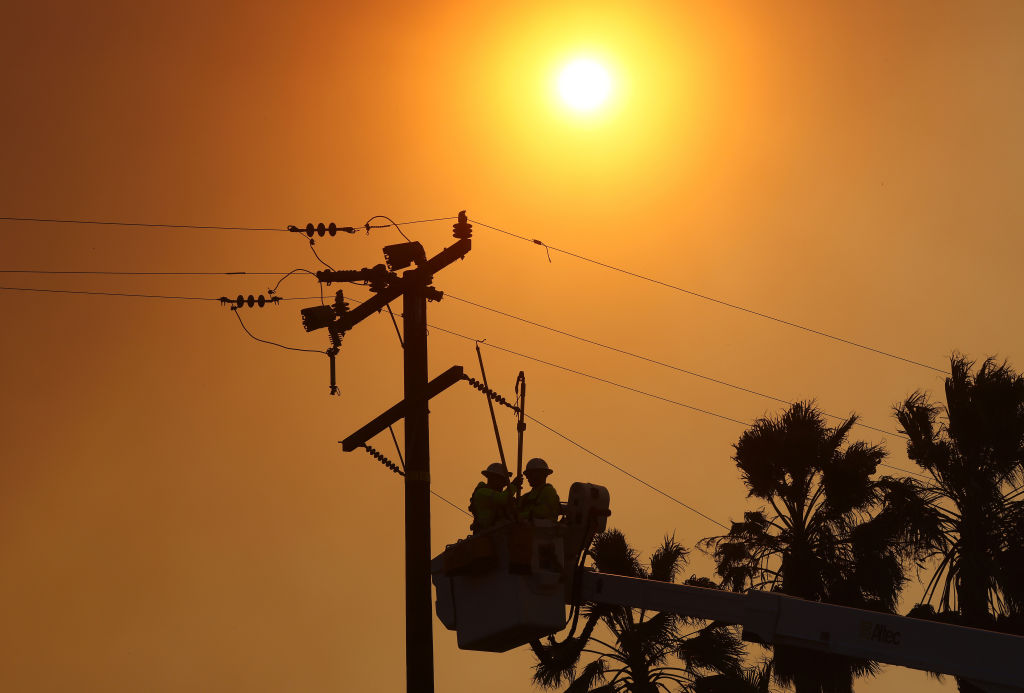
Workers repair power lines damaged during the Bond Fire in the Silverado Canyon area of Orange County on December 3, 2020 near Irvine, California. (Mario Tama / Getty Images)
When intense rains began battering California last December, Nancy Kille’s landline had already started failing. In the Santa Cruz mountains, where she lives, trees and power poles toppled, cutting power and closing roads. Landslides prompted evacuation orders and filled homes with muck. A river rose and engulfed cars.
Kille’s phone trouble started a couple of weeks earlier. She would go anywhere from hours to a couple of days where it wasn’t possible to place calls from her home on a sloping, wooded lot. Much of the small community where she lives usually doesn’t have cell reception, so her landline can feel essential. During the storms, which prompted a federal disaster declaration, Kille heard of two instances where residents needed ambulances but did not have working communication methods to call one.
“If the power goes out and there’s an emergency, it is not just an inconvenience, it can be life-threatening,” she said.