The British Miners’ Strike of 1984–85 Was a Landmark for Women in the Labor Movement
When Britain’s miners went on strike from 1984 to 1985, women joined the picket lines in unprecedented numbers. These women refused to be intimidated by the police or stay at home, and they left a lasting mark on the British labor movement.
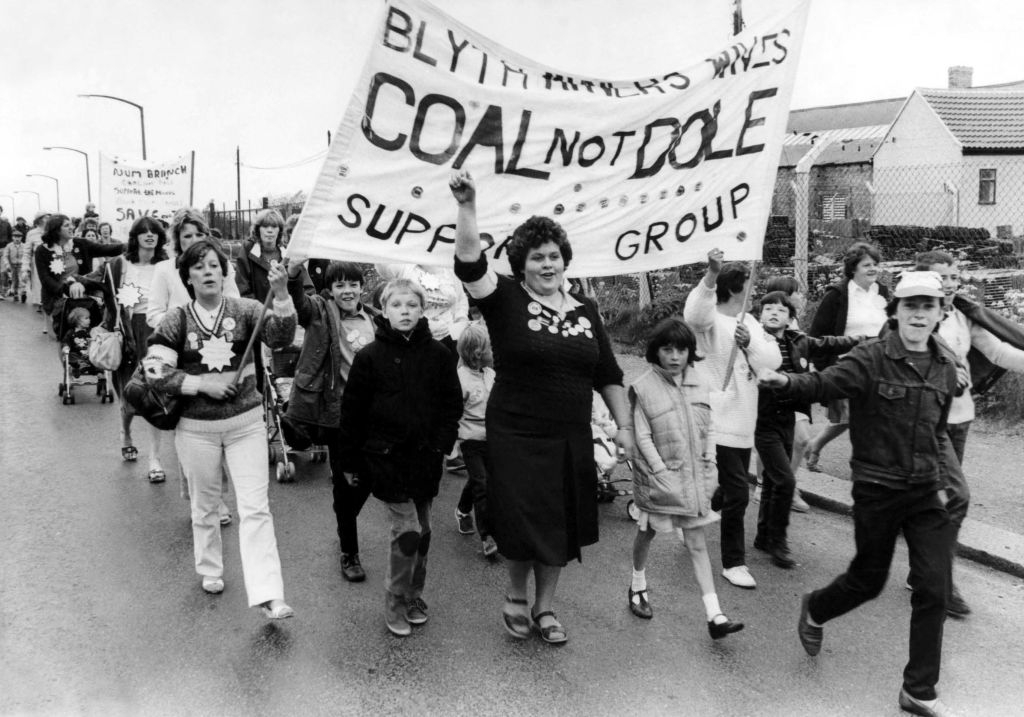
Women rally in support of Northumberland miners on June 9, 1984. (NCJ Archive / Mirrorpix / Getty Images)
The miners’ strike of 1984–5 pitted the Margaret Thatcher government and the National Coal Board against Arthur Scargill’s National Union of Mineworkers (NUM) in a battle for the future of Britain’s coal-mining industry, and, by proxy, the entire direction of the country’s political economy.
The NUM was probably the most male-dominated of any trade union in Britain, and almost all its members were men; women had been excluded from underground work by the “protective” legislation of the nineteenth century. 1960s and 1970s Britain saw, however, women taking an increasingly prominent place on picket lines, in famous strikes like that of the Ford workers in Dagenham in 1968, and at the Grunwick film-processing plant in Willesden between 1976 and 1978.
In the national miners’ strikes of 1972 and 1974, a handful of miners’ wives joined a few picket lines around the country. When the miners came out again in March 1984, women’s presence on picket lines was quickly one of the most remarked-upon aspects of the strike. The feminist journalist Jean Stead summed up the widespread view of the women’s support movement in her book Never the Same Again, published in 1987: