The Miners’ Fight in Their Own Words
Based on the accounts of nearly 150 people directly involved in the 1984-85 miners’ strike, Robert Gildea’s new book is a powerful retelling of the seismic struggle that has divided Britain for decades.
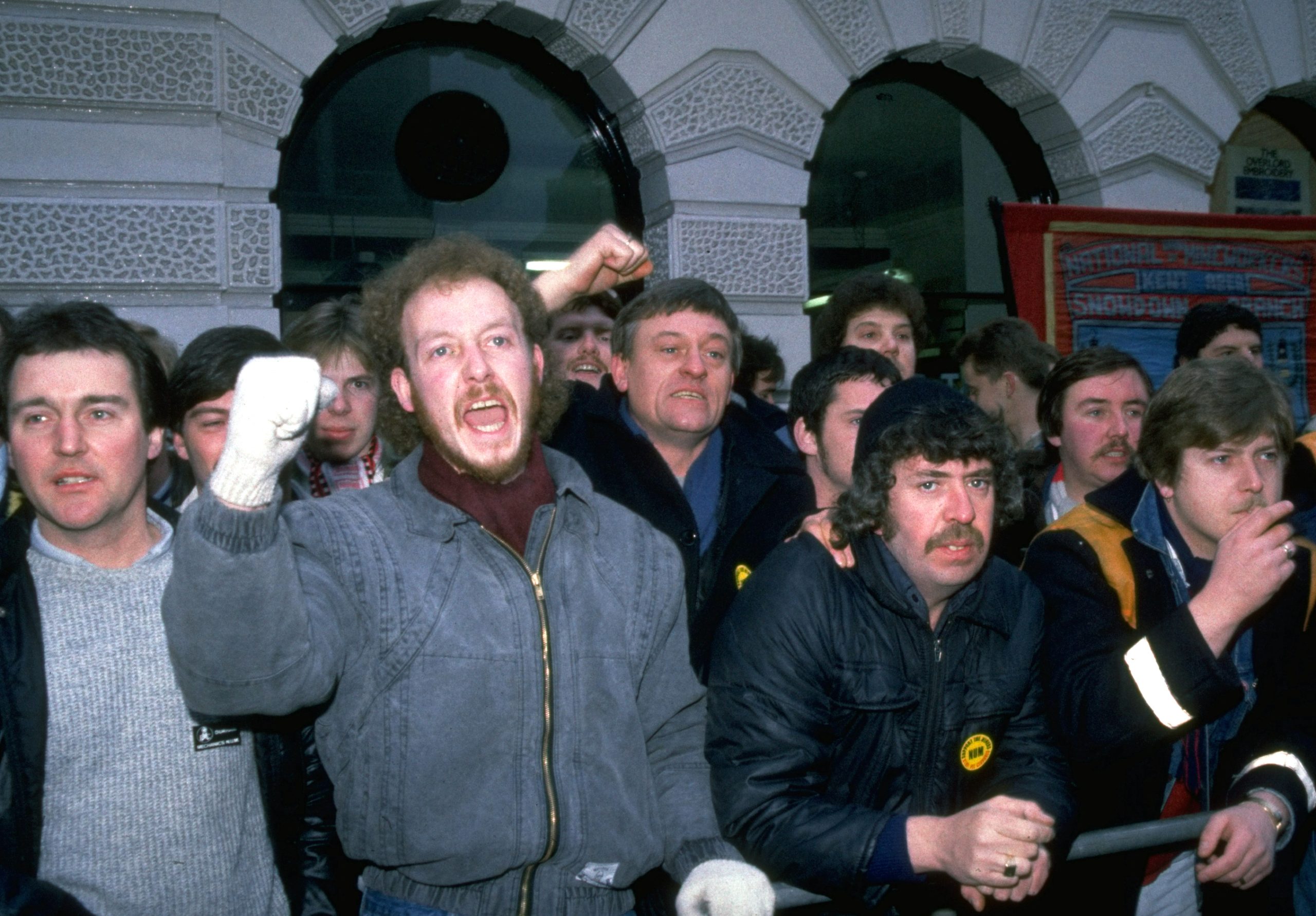
Miners demonstrating during the strike on February 1, 1985. (Sahm Doherty / Getty Images)
Even as its fortieth anniversary approaches, the repercussions of the 1984–85 miners’ strike continue to reverberate. For almost a year, 180,000 miners — alongside their families and allies drawn from a plethora of other social movements — fought valiantly in defense of their pits and jobs, and in defiance of the Margaret Thatcher government. Their defeat was an absolute necessity if the Thatcherite neoliberal counterrevolution was to proceed, wiping away most of the economic gains won by the British working class since 1945, and it continues to cast a pall over the labor movement to this day.
Thatcher’s eleven-year tenure as prime minister was marked by a long list of set-piece industrial confrontations: the 1980 steelworkers’ strike, the Warrington printworkers’ strike in 1983, the 1986 Wapping dispute and the ambulance strike of 1989–90 being prominent among them. But the miners’ strike stands apart as, in Seumas Milne’s words, “The decisive domestic confrontation of the Thatcher years.” The strike was not just a clash of conflicting economic class interests but also of diametrically opposed and irreconcilable worldviews: one prizing solidarity and collective uplift above all, egalitarian and rooted in community, and the other radically individualistic, seeking to reimpose traditional social and economic hierarchies and speaking the language of cold financial calculation.
At its best, the miners’ strike pointed the way to a new, more creative and broader kind of class politics, forging links between industrial militants and the new social movements that had emerged during the upheavals of the 1960s. But this unruly grassroots activism ran up against a Labour Party desperate to cleanse itself of any taint of radicalism, and trade union leaders suing for peace with the Thatcher government. In the aftermath of the miners’ defeat, Britain’s old industrial heartlands — both within and beyond the coalfields — were plunged into deindustrialisation, poverty, unemployment (or fly-by-night precarious work, with dismally low pay subsidized by the state through the benefits system), and addiction. The Labour Party, meanwhile, came to embrace the core tenets of neoliberalism and the inviolability of “markets” — a coy euphemism for untrammeled capitalist class power.