We Should Look to Vienna for Answers to Our Housing Crisis
Vienna’s social housing triumphs show that when governments invest in housing as a human right, they can combat homelessness and inequality. It is an inspiration for what cities can accomplish if they elevate human needs over the pursuit of private profits.
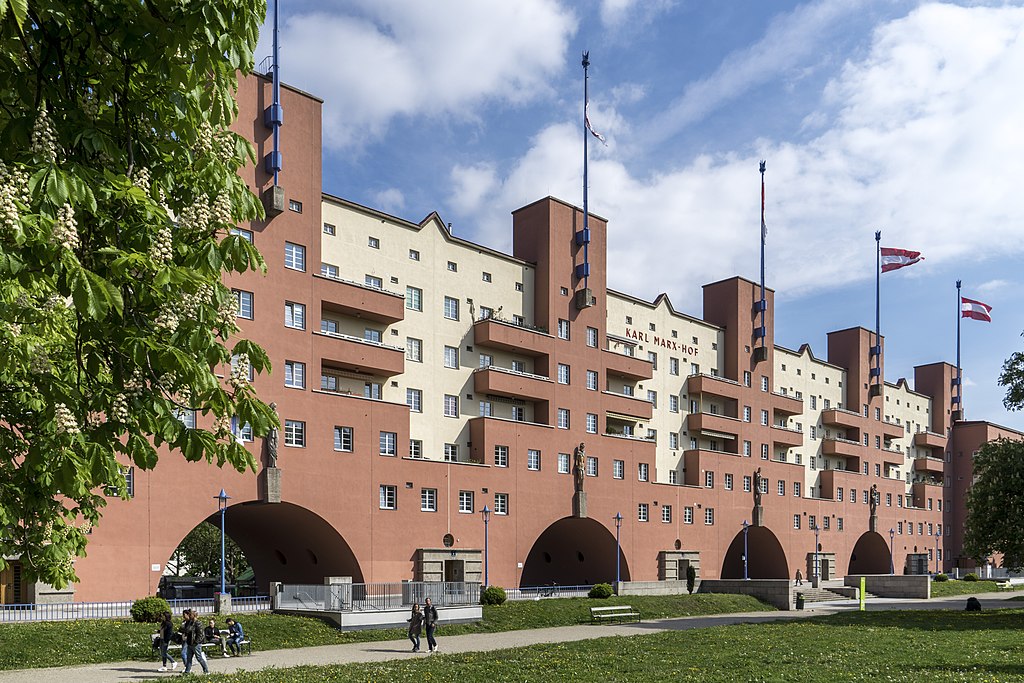
The Karl-Marx-Hof municipal housing complex in Vienna, Austria. (Thomas Ledl / Wikimedia Commons)
At the official opening of the legendary Karl-Marx-Hof municipal housing complex on October 12, 1930, Vienna mayor Karl Seitz said, “When we are no longer here, these stones will speak for us.” And they do, along with the 380 other public housing developments built in Vienna during the 1920s and 1930s that ultimately housed a quarter million people.
I recently visited several of these complexes, including Karl-Marx-Hof, which spans more than a kilometer and includes 1200-plus apartments. The residents of those apartments pay a maximum of 25 percent of their income to live in flats that can be as large as four bedrooms. Many of them feature expansive balconies with colorful geraniums cascading down their front, looking out over courtyards graced with towering chestnut trees and modern playgrounds.
The origin story for Vienna becoming the world’s most celebrated example of social housing began after World War I. In the postwar elections, the Social Democratic Workers’ Party gained power, ushering in an era known as “Red Vienna.” The new government leaders inherited a housing crisis so dire that overcrowding forced 170,000 Vienna residents to become what were called “bed-goers,” leasing sleeping space in shifts while still paying extremely high rents. Often, a single sink and toilet were shared by dozens of strangers. Tuberculosis spread so readily in these cramped quarters that it was known across Europe as “the Viennese disease.”