The Supreme Court’s “Major Questions Doctrine” Is a Threat to Democracy
The “major questions doctrine,” cited to invalidate student loan forgiveness, empowers the conservative Supreme Court to veto any executive action with broad social impact. Its goal is to undermine the government’s ability function and aid average people.
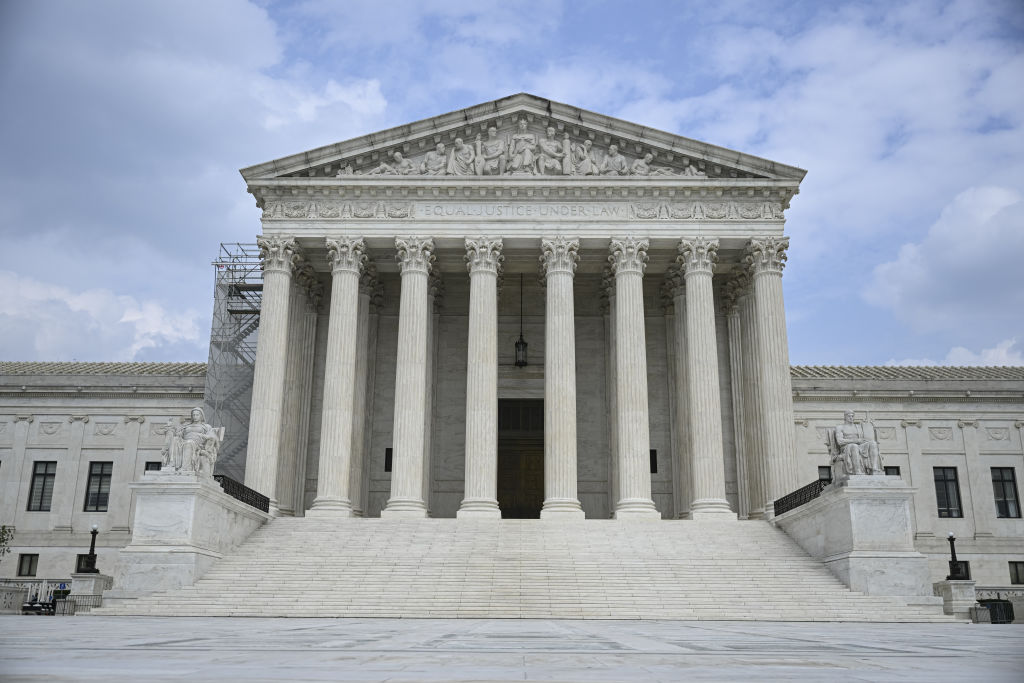
The “major questions doctrine” allows the Supreme Court to look at almost any consequential action by a federal agency and question whether it was ever really authorized by Congress. (Celal Gunes / Anadolu Agency via Getty Images)
On June 30, the Supreme Court invalidated the Biden administration’s student loan forgiveness program, which promised to wipe $10,000 off the debt of borrowers earning less than $125,000 per year and $20,000 off the debt of Pell Grant recipients — in total, around $430 billion. While the primary victims of the Supreme Court’s decision are debtors, another long-term danger stems from the reasoning behind the decision.
The Biden program was unlawful, according to the court, because the 2003 Higher Education Relief Opportunities for Students (HEROES) Act, which authorizes the secretary of education to “waive” or “modify” student debt obligations during a national emergency, could not have possibly authorized debt cancelation on this scale. If Congress wanted to permit something so vast and sweeping, it would have said so explicitly.
This idea — that “Congress does not hide elephants in mouseholes” — is called the “major questions doctrine.” On its face, it is consistent with Supreme Court precedents. In reality, it empowers the Supreme Court and its conservative majority to veto the rare executive actions that actually have a social impact.