Selling Sunset Is a Window Into the Out-of-Control Luxury Gentrification of LA
The long-running Netflix reality show Selling Sunset often veers into the territory of Real Housewives–style drama. But it also provides a close-up look at the investor-fueled irrationalities of the luxury real estate market.
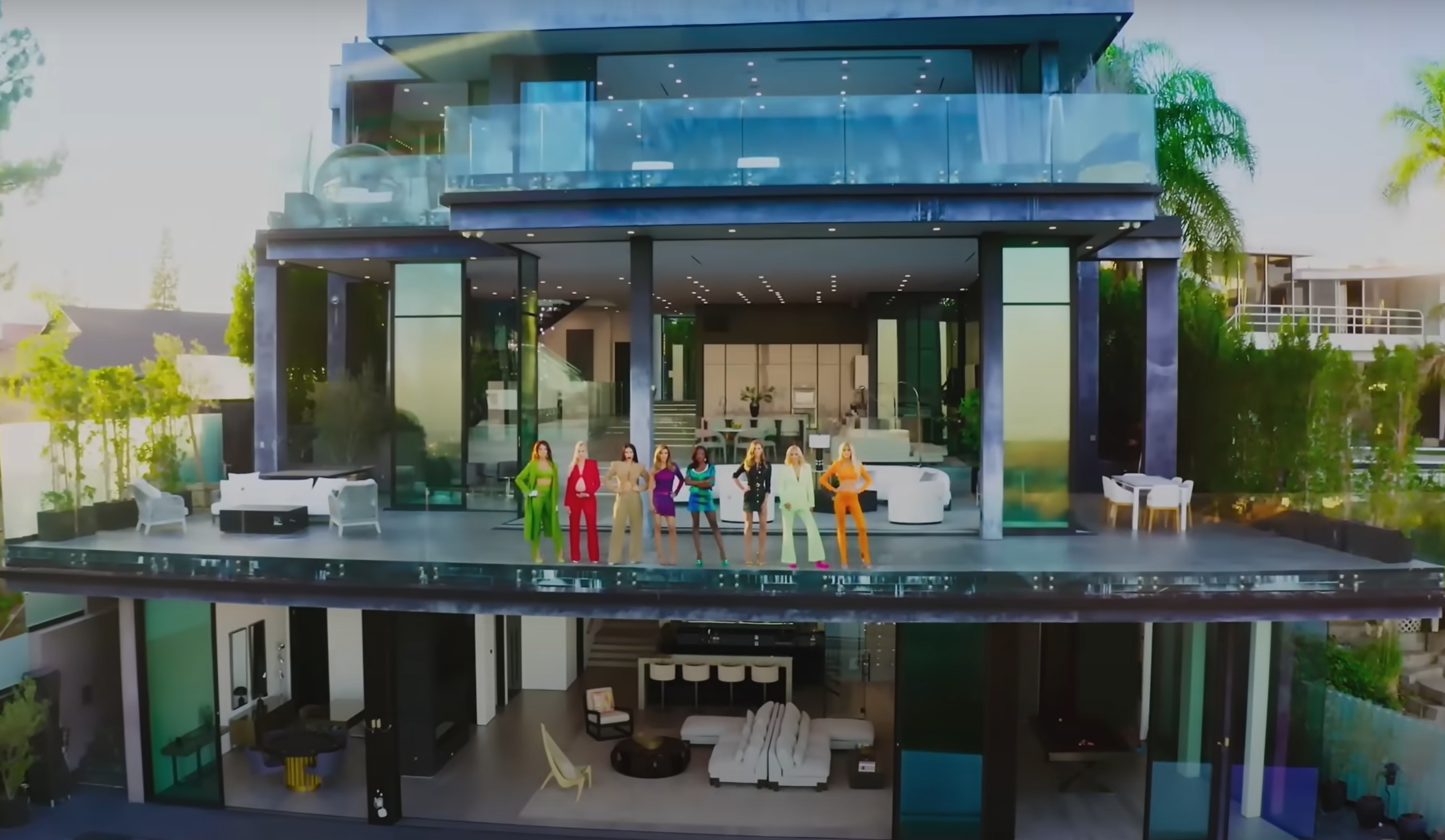
Agents from Selling Sunset on the balcony of a luxury property. (Netflix, 2023)
Near the start of Netflix’s now-long-running reality show Selling Sunset, real estate agent Heather Rae El Moussa (née Young) pans to the camera and makes a rather Marxian observation about labor in a wage-based economy. The impeccably made-up agent (it has been reported that she and her coworkers, not Netflix, pay for their own makeup artists) says, “It’s hard because if you don’t work and hustle . . . you don’t get paid.” A few scenes later, she is ostensibly “at work” at the office of her employer, the Oppenheim Group, but is chided by another agent for excessively gossiping: “Heather, shut up and do some work!” “I told you, I don’t have a computer!” she cries back.
The office scenes in the show are often like this: not a lot of emailing or other obvious work going on, but small groups of women inevitably veering into shit-talking. It quickly becomes clear that, like for any good salesperson, building and maintaining relationships — in their case, with multimillionaires and their handlers — is the real job.
Soon to enter its seventh season and having spawned two spinoffs, Selling Sunset follows a rotating crew of female real estate agents and their male bosses at the Oppenheim Group, a brokerage dealing with luxury property mainly in the Hollywood Hills and the Sunset Strip. It is the apotheosis of TV producer Adam DiVello’s work. His first long-running megahit show, The Hills, prefigured Selling Sunset’s approach, with high-quality footage — described in one publication as “cinematic” — of attractive women dealing with often very banal workplace drama (eyerolls and sideways glances over laptop screens are perfectly rendered).