King Coal Is a Powerful Requiem for an Appalachian Myth
Appalachians built their identities around an industry that’s nearly dead. Elaine McMillion Sheldon’s new documentary film King Coal asks: What happens when the king dies and there’s no heir apparent?
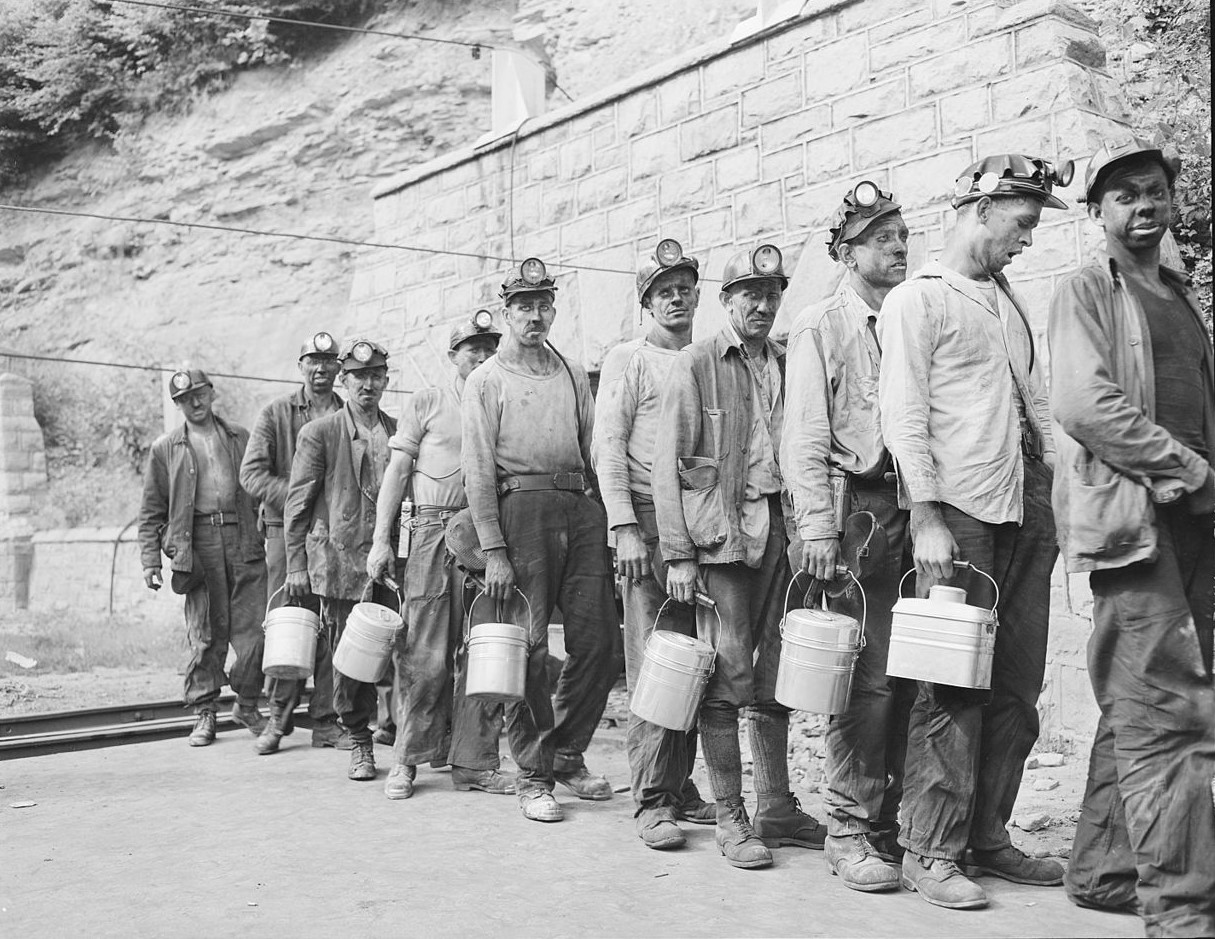
Miners checking in at the lamp house at completion of a morning shift. Koppers Coal Division, Kopperston Mines, Kopperston, Wyoming County, West Virginia, August 22, 1946. (Russell Lee / US National Archives and Records Administration via Wikimedia Commons)
A few hundred million years ago, when rocks and water ruled the world, the Appalachian Mountains rose out of a shallow sea. Humans came much later, the first appearing in the region just twelve thousand years ago, and have always had to creatively accommodate its ancient geology. Today the roads of Appalachia snake and coil, making mystifying designs through the stubborn mountains. Appalachia and its people are governed by a turbulent history.
Documentary filmmaker Elaine McMillion Sheldon’s family has been in Nicholas County, West Virginia for eight generations, living in the same hollow on Fenwick Mountain since the turn of the twentieth century. The story goes that their ancestors arrived on foot from Wise County, Virginia, about 150 miles southwest as the crow flies. But the crow can fly over mountains, and Central Appalachia is an almost impassable area on land. As for how they made the journey, Sheldon says, “Aunt Ola reckons they just followed a river.”