Home Insurers Are Exploiting the Climate Crisis to Gut Consumer Protections
As the risk of wildfires and hurricanes continues to intensify in states like California and Florida, home insurers are shifting costs of climate-fueled disasters to homeowners by raising premiums and demanding that regulators relax consumer protections.
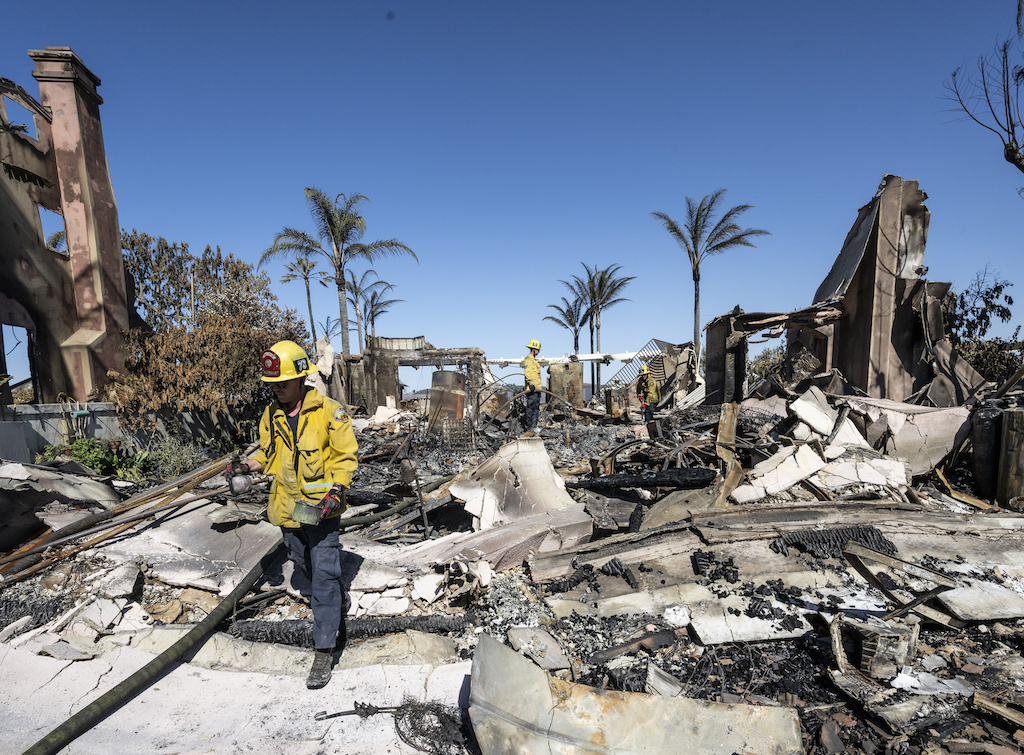
A firefighter salvages items from a families house on Coronado Pointe in Laguna Niguel, California, on May 12, 2022. (Paul Bersebach / MediaNews Group / Orange County Register via Getty Images)
In the last two months, three of the country’s largest home insurers have announced plans to limit new business in California, citing rising costs in a state where climate-fueled wildfires have become a fact of life. Homeowners already bracing for extreme weather this summer now face another threat: that their homes will become uninsurable, making it nearly impossible to rebuild or relocate should disaster strike.
Yet as insurers demand higher rates and cancel policies amidst intensifying climate risks, they’re actively contributing to those risks. The three groups planning to limit or cease new business in California — Farmers Insurance Group, State Farm, and Allstate — also hold nearly $40 billion in fossil fuel investments, according to a Lever review of the most recent data reported to state regulators.
But instead of addressing their own role in the climate crisis, insurers are using the disaster to push for deregulation. In order to continue writing homeowner policies, insurers and their lobbying groups are now demanding that regulators relax the state’s landmark price-gouging protections, considered the most rigorous in the nation.