Walt Rostow’s Development Theory Shows That Capitalism Relies on Brutal Violence
Economist Walt Rostow advanced an influential development theory while working as an adviser to the Kennedy and Johnson administrations. Rostow’s advocacy of murderous violence in Vietnam flowed directly from his theory of how to promote capitalist growth.
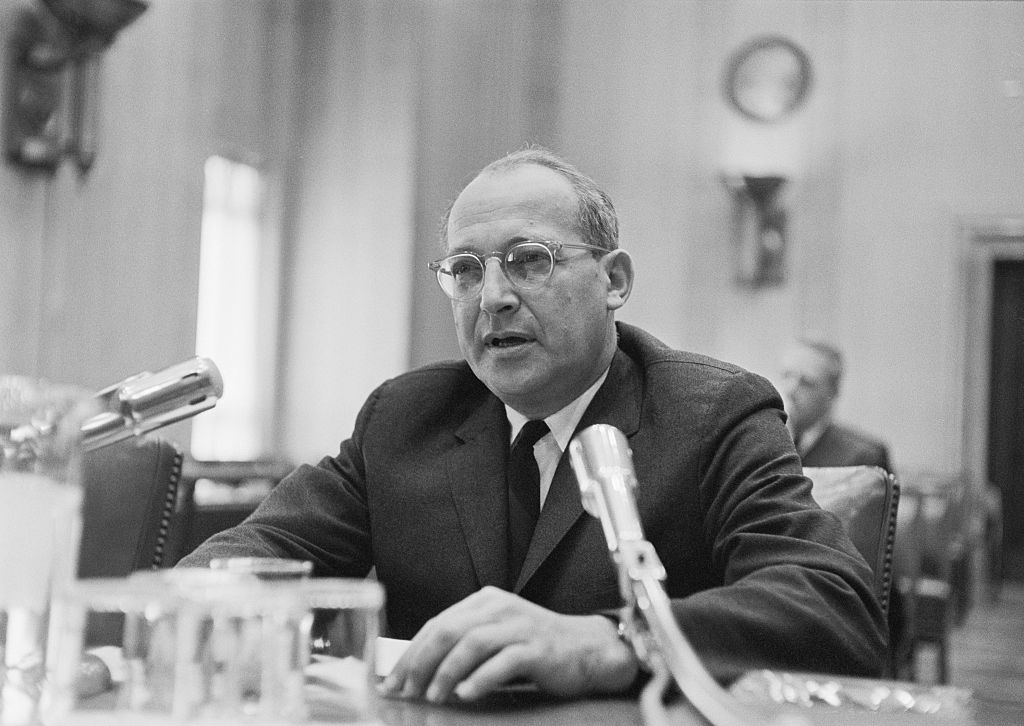
Walt Whitman Rostow appearing before the Senate Foreign Relations Committee on his nomination to be Counselor of the State Dept. and Chairman of the Policy Planning Council. (Bettmann / Getty Images)
Commonsense notions of development associate it with capitalist modernization. Such notions assume that cumulative economic growth enables poor countries to become more like rich ones.
To facilitate such growth, policymakers, international institutions, and many academics urge poor countries and their populations to adopt modern ways of thought and action, dispensing with familial or communal loyalties and embracing the benefits of capitalist markets and impersonal bureaucracies.
Those who adopt this perspective insist that such modernization will be beneficial for developing societies in the long run, even though there will always be those who lose out and seek to resist the process. However, since the benefits of economic growth and cultural change outweigh the losses, it is legitimate to forcefully suppress such opposition.