Understanding North Korea, Beyond Its Palace Intrigue
Kim Jong Un’s sister, Kim Yo-jong, looks destined for power in North Korea. But political dynamics in the country are far more complex than Western observers often appreciate.
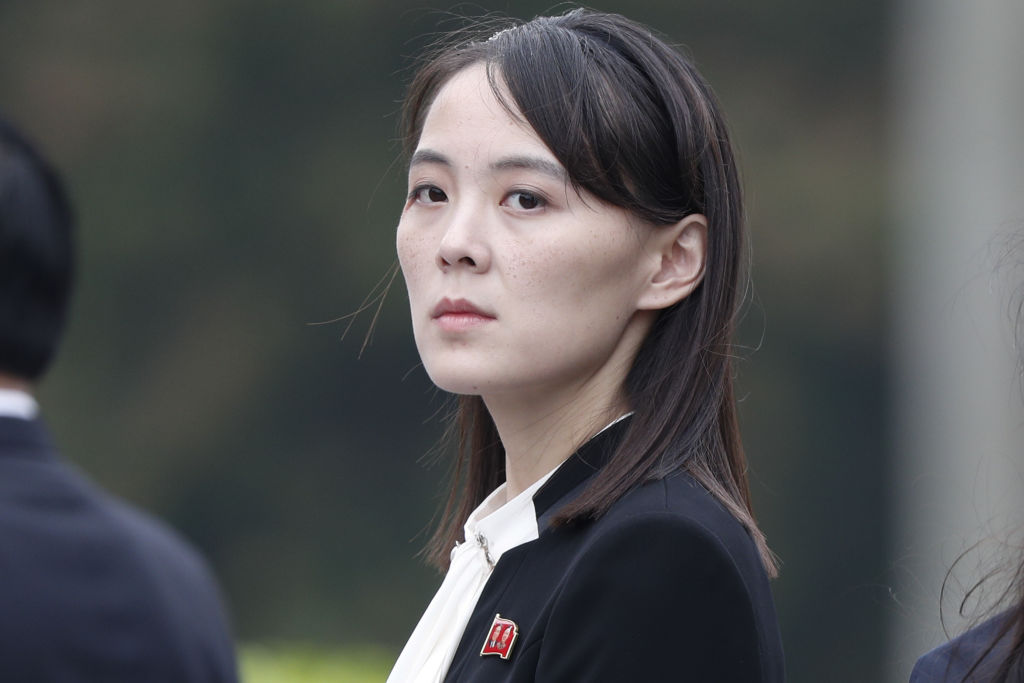
Kim Yo-jong, sister of North Korean leader Kim Jong Un, attends a wreath-laying ceremony at the Ho Chi Minh Mausoleum in Hanoi, Vietnam, on March 2, 2019. (Jorge Silva / Pool via Bloomberg)
North Korea has been led by a single family since 1948. International fascination with the internal goings-on of the “hermit kingdom” can be relentless. The global media has taken an interest in the rise to political prominence of Kim Yo-jong, sister of the current supreme leader, Kim Jong Un. Every time Kim Yo-jong attends a high-profile diplomatic summit, threatens the United States, or vows to turn the Pacific into a firing range, the global media reacts with speculation that she is her sickly brother’s imminent successor.
Two commentators have recently tried to make sense of all this guesswork. Yoshihiro Makino, former Seoul bureau chief of the Japanese Asahi Shimbun, released Kim Jong-un to Kim Yo-jong in December last year. Tufts University professor and former US government adviser Sung-Yoon Lee weighed into the debate this week with The Sister.
Neither book assumes much prior knowledge about North Korea. Despite the efforts of historians like Suzy Kim and pundits like those on the Blowback podcast, there is little knowledge of North Korea in the West. In order to engage with Makino and Lee’s arguments, some basic context is crucial.