How Chicago’s Working-Class Movement Elected Mayor Brandon Johnson
In a conversation with Jacobin, Chicago Teachers Union president Stacy Davis Gates, city councilor Carlos Ramirez-Rosa, and editor Alex Han discuss how Chicago’s working-class movement elected one of its own as mayor and where that movement goes now.
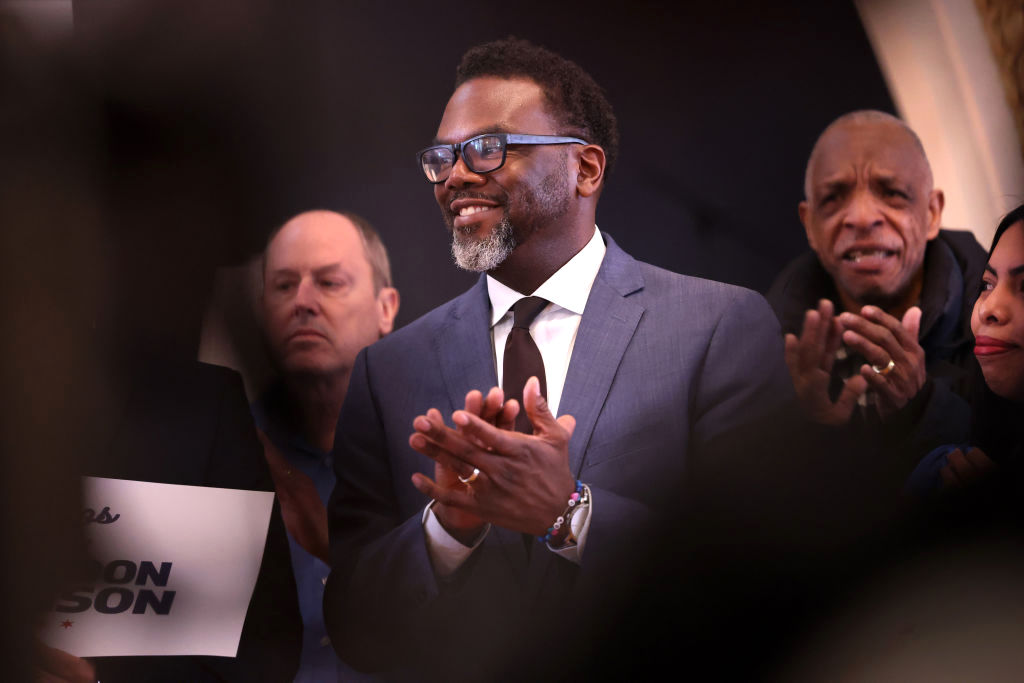
Brandon Johnson at an event on March 17, 2023 in Chicago, Illinois. (Scott Olson / Getty Images)
The Chicago Teachers Union (CTU) has transformed Chicago politics in the decade and a half since a group of teachers organized within the CTU known as the Caucus of Rank-and-File Educators (CORE) took over their union. The CTU has repeatedly gone on strike, opposed austerity, and built a political organization called United Working Families (UWF) that, alongside other like-minded unions and community organizations, has reshaped electoral politics in the city and established itself as a major fighting force for Chicago’s working class as a whole.
Nowhere has the union’s power been on better display than the recent municipal elections in Chicago, in which the CTU won an incredible come-from-behind victory in the mayoral race, electing one of their own, a former middle school teacher, CTU staffer, and Cook County commissioner Brandon Johnson as mayor — first by making it to a runoff against a large pool of challengers and an incumbent, mayor Lori Lightfoot, in the first round of voting in February, and then by defeating former Chicago Public School CEO and austerity hatchet man Paul Vallas in the runoff.
The win was stunning. But in many ways, winning was the easy part. As he prepares to take office today as the executive of the United States’ third-largest city, Johnson has a wide range of challenges ahead of him.