For Airline Workers, a Willingness to Strike Gets the Goods
WestJet pilots just secured a deal from the airline, averting a strike at the 11th hour. It’s a win that reinforces the truth that taking proactive labor actions delivers results — a noteworthy fact for an industry currently witnessing a labor-rights push.
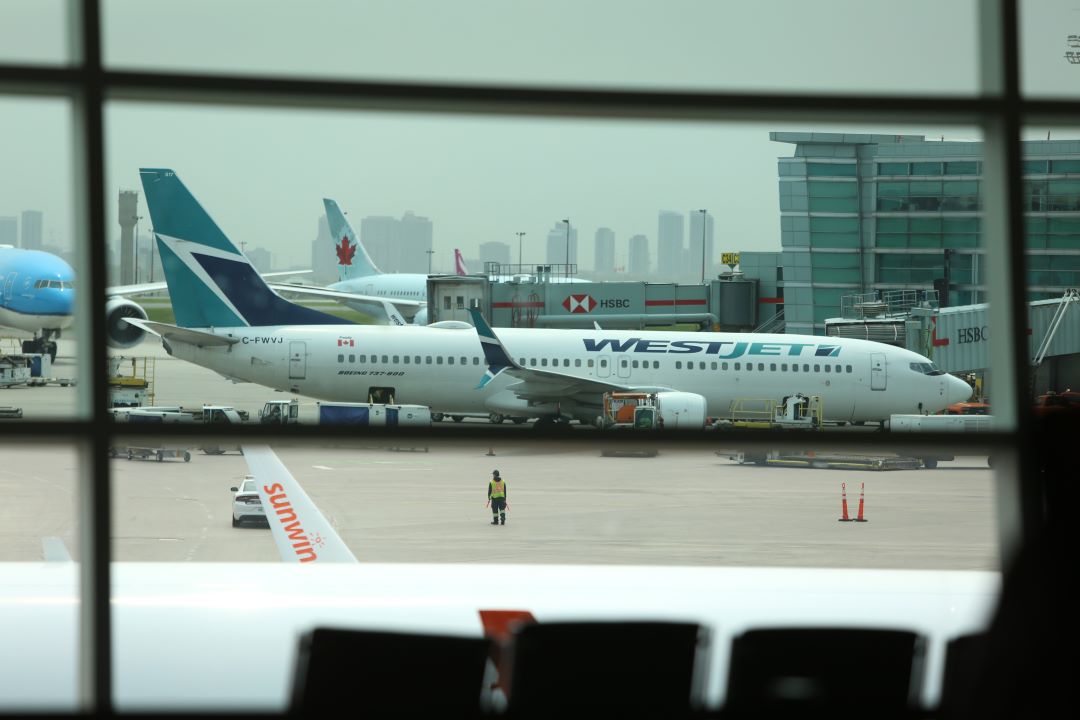
A WestJet Airlines airplane is seen at Toronto Pearson International Airport in Mississauga, Ontario, Canada, on May 16, 2023. (Mert Alper Dervis / Anadolu Agency via Getty Images)
Last week, on the eve of a long weekend, WestJet and Swoop pilots secured a tentative agreement, subject to member ratification, that averted a strike. WestJet management was initially ready to go to war with its pilots, going so far as to threaten and prepare for a lockout. Then the chest-thumping gave way to the reality that management was in an untenable position, and now it’s all smiles and backslapping after workers stood firm.
The four-year contract includes improvements in take-home pay to the tune of CAD$400 million, retroactive payment to January, the option of a pension, and a handful of other quality-of-life improvements. It’s a big win for workers in a tough industry who are proving once more that labor action delivers results.
As Captain Bernie Lewall, WestJet pilot and chair of the Master Executive Council said on the council’s podcast, “All our talking points have been about making WestJet a career airline.” Prior to the agreement in principle, WestJet pilots were paid toward the lower end of the North American average. The new deal will bump them up considerably and, importantly, remedy the company’s conspicuously absent pension option.