The Biden Administration Is Refusing to Regulate Toxic Fire–Causing Plastic Production
After an April 11 plastics recycling plant fire that spewed toxins and caused mass evacuations in Richmond, Indiana, the Biden administration has failed to take action on regulations that could prevent similar chemical infernos from occurring in the future.
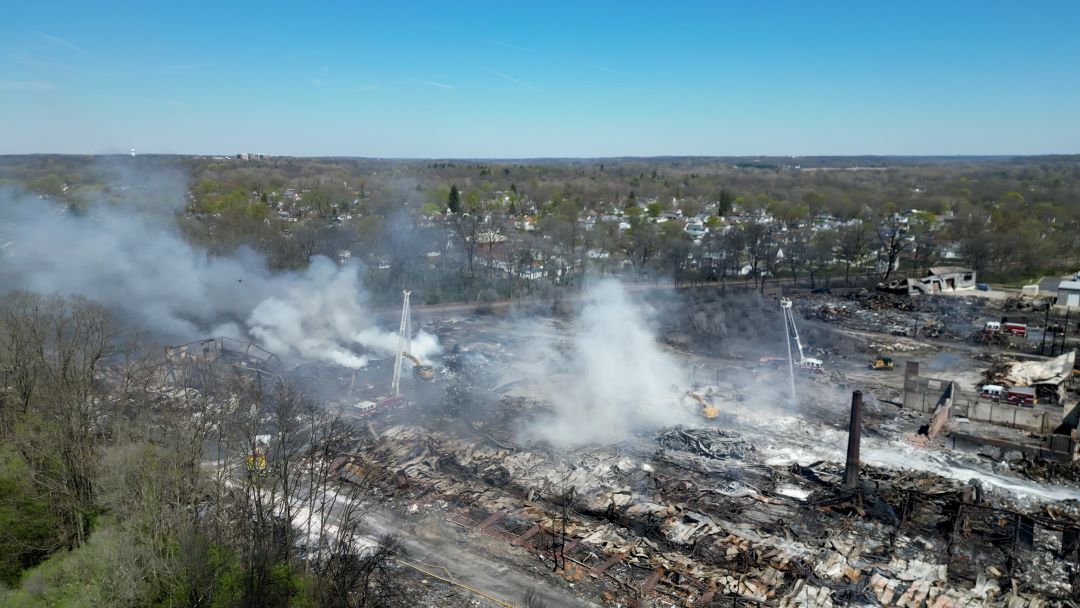
This aerial photo taken on April 13, 2023, shows an industrial site after a fire in Richmond, Indiana. (Shi Lei / Xinhua via Getty Images)
As concerns mount over an April 11 plastics recycling plant fire that spewed toxins and caused mass evacuations in Richmond, Indiana, the Biden administration has failed to take action on regulations proposed in the wake of the toxic train derailment in East Palestine, Ohio, that could prevent similar chemical infernos from occurring in the future.
By refusing to challenge the plastics industry, advocates say the White House is overlooking the dangers of mass production and processing of plastics, beyond just how they contribute to water and land pollution. Only by preventing the creation of plastic waste at the front end, experts say — by reducing the types of production that contributed to the February train derailment in East Palestine, Ohio — can the type of fire that occurred at the Richmond warehouse be averted.
The plastic recycling facility in Richmond had been cited numerous times by city and state officials over the years, but the central cause of the waste buildup was a decision by the Chinese government to stop most imports of plastic waste in 2017, local officials told Indianapolis’s NBC affiliate. Shortly thereafter, additional waste began to build up at the 175,000-square-foot facility.