Libertarians Weren’t Always Apologists for the Rich and Powerful
A new history of libertarianism challenges the conventional understanding of the tradition by spotlighting its radical currents. Unfortunately, there’s barely a remnant of that history today — most libertarians threw in their lot with the Right long ago.
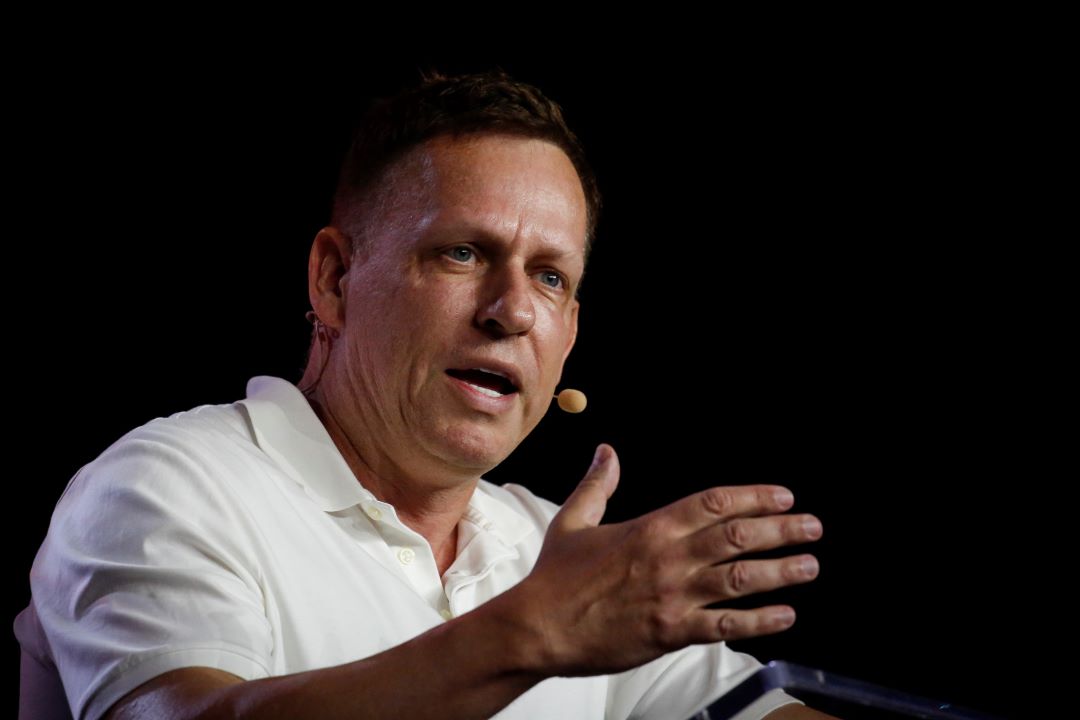
Peter Thiel, cofounder of PayPal, Palantir Technologies, and Founders Fund, gestures as he speaks during the Bitcoin 2022 Conference at Miami Beach Convention Center on April 7, 2022. in Miami, Florida. (Marco Bello / Getty Images)
I have always found it quaint and rather touching that there is a movement [libertarianism] in the US that thinks Americans are not yet selfish enough.
In his 1995 book Self-Ownership, Freedom, and Equality, socialist thinker G. A. Cohen serves up a scathing critique of Robert Nozick’s libertarian philosophy. Nozick made such a fetish of property rights, Cohen charged, that a millionaire could light his cigar with a $5 bill in front of a starving child and go home with a spotless conscience. After all, the child’s suffering may be regrettable, but she has no entitlement to the millionaire’s five dollars — no matter how much good it may do her.
Libertarians have a well-deserved reputation as the most zealous defenders of gloves-off capitalism. Along with Nozick, the canon includes gems like Ayn Rand, who infamously described businessmen as the real “persecuted minority” in the heyday of the civil rights movement, and Dickensian defenders of sweatshops. From Ludwig von Mises’s flattering words about fascism to the thinly veiled racism of so called “bordertarians,” many freedom-talking libertarians seem fine with authoritarianism as long as it protects property and the almighty dollar.