William Longbeard Was England’s First Revolutionary Leader
William Longbeard led a 12th-century revolt in London that forms a key part in the thread of class struggle that runs through English history. He deserves a place of honor in the radical tradition.
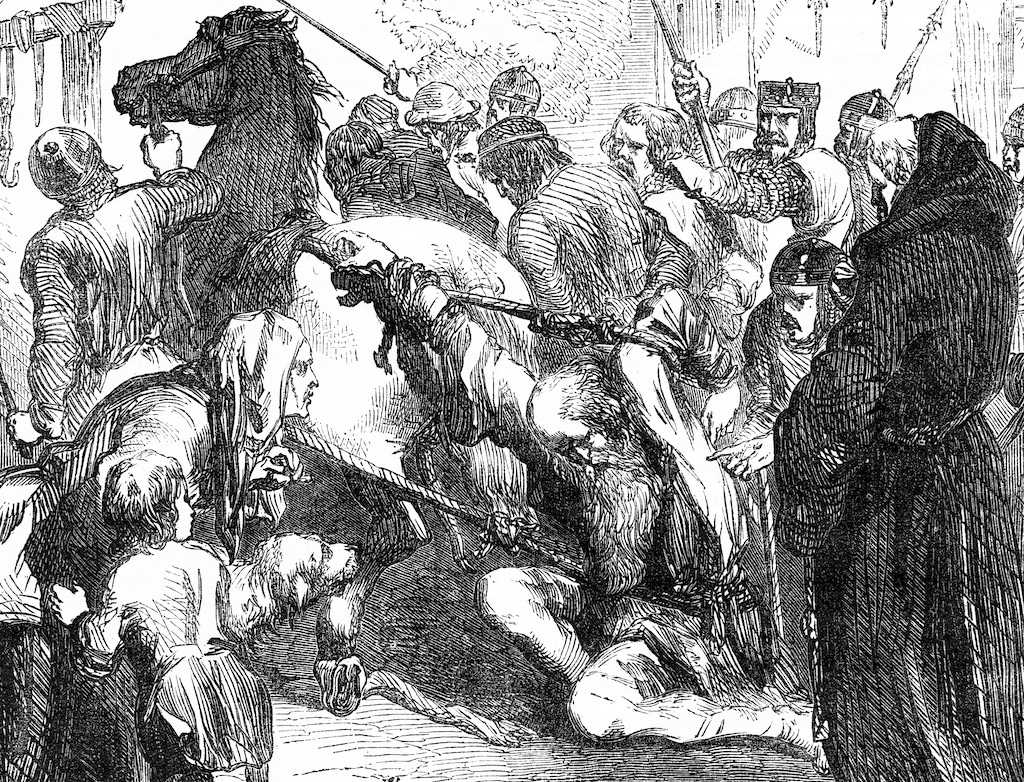
Illustration of the death of William Longbeard from John Cassell’s Illustrated History of England, Vol. I, 1857. (Getty Images)
The twelfth-century figure William Longbeard was once widely known as a “spirited champion” of the “poor people” of London, executed because “death was long a favourite remedy for silencing the people’s advocates,” in the words of Charles Dickens. The story of Longbeard and the revolt he led in 1196 formed part of the nineteenth-century radical tradition.
However, that tradition largely failed to survive into the century that followed, and Longbeard sank into obscurity. He deserves to be rescued from that position, as the 1196 revolt forms a key part of the thread of class struggle that runs through English history.
Turbulent Preachers
William Fitz Osbert, variously referred to by the chroniclers as “Longbeard” or “William with the beard,” was a scion of London’s ruling elite, yet his nickname signaled his adoption of the role of an ascetic holy man. It was unquestionably this religious status, unconnected in any official way to the Church, that gave him the prominence and authority needed to lead a popular movement among the poor and middling citizens of London.