Tax the Rich, Because Inequality Is Bad for All of Us
Economic inequality undermines democracy, hastens environmental destruction, fosters anxiety, and erodes social trust. We can start to solve these problems by taxing the rich, as progressives and socialists in New York State are now proposing.
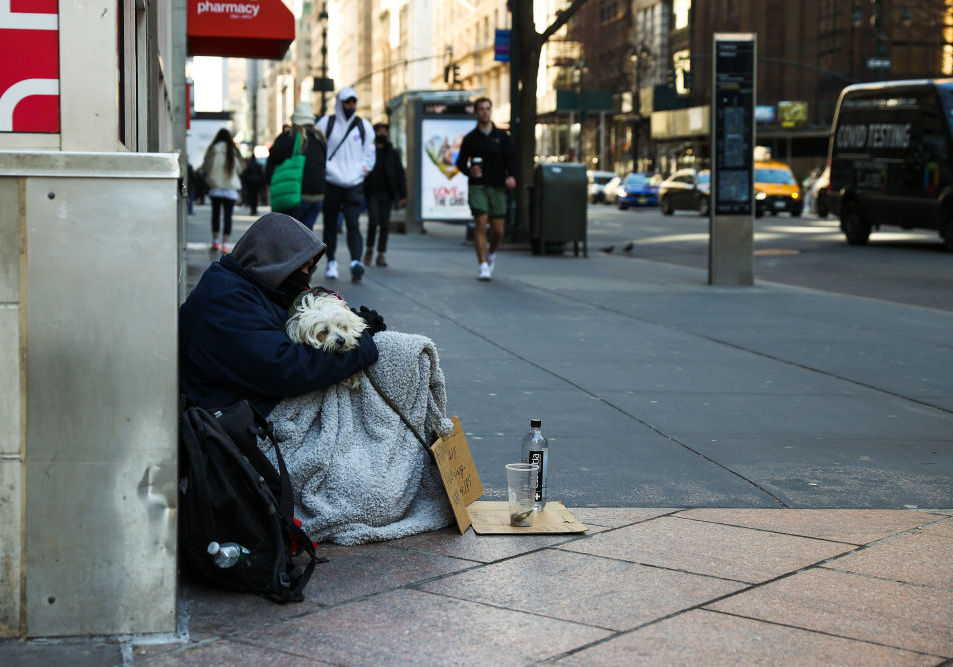
A homeless person is seen near a subway station in New York City. (Tayfun Coskun / Anadolu Agency via Getty Images)
Inequality is hazardous to your physical and mental health, your community life, and your budget. Wherever you are in the status hierarchy — top, bottom, or middle — it takes its toll on you. And while it is inevitable under capitalism, its effects can be accentuated or mitigated by public policies.
One key policy mechanism to address inequality is taxing the rich. And one place that would benefit from taxing the rich is New York. New York City is the capital of the world financial system, and New York State is the most unequal state in the nation: 1 percent of households take home 31 percent of all income in the state, whereas the top 1 percent of households nationally capture 21 percent of all income. That is because the very wealthy in the state are exceptionally wealthy. While the top 1 percent in the United States has an average annual income of $1.3 million, New York’s top 1 percent makes $2.2 million.
The Invest in Our New York (IONY) coalition — made up of New York City Democratic Socialists of America (NYC-DSA), the Working Families Party (WFP), New York Communities for Change, and local community and political organizations across the state — is proposing to challenge this obscene inequality by raising taxes on the superrich and investing in housing, public transportation, education, and the environment.