The Paris Commune Was a Unique Experiment in Running a City for Its People
On this day in 1871, the Paris Commune began its brief history before a conservative government drowned it in blood. While it lasted, the Commune sketched out a new way to run a major city based on democracy and the public good, not private profiteering.
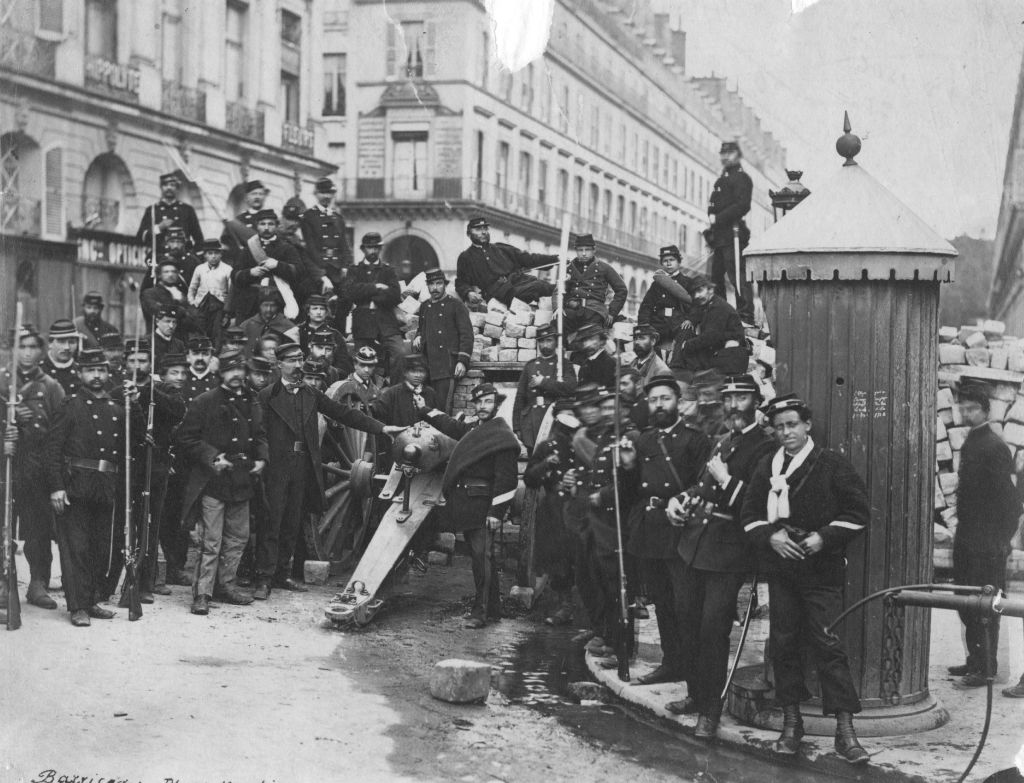
National guardsmen pose in front of an artillery barricade in the Place Vendome, during the civil war between the Third Republic and the Paris Commune, following the Franco-Prussian War. (Hulton Archive / Getty Images)
The Paris Commune ended in mass violence with the slaughter of thousands of Communards on the barricades and the burning of much of the city. This final struggle forged the Commune as an iconic event in the history of socialism and the collective memory of popular struggle.
Yet it is now only vaguely remembered that before the Commune’s demise, the people of Paris had set about reconstructing authority and governance in the city along unprecedentedly revolutionary lines, grounded in the popular euphoria surrounding the central government’s retreat from Paris on March 18, 1871.
Despite near-constant threats to the Commune’s existence from the rival government occupying Versailles, the audacious common folk of Paris imagined and began to constitute a new city and a new politics of their own design. Time, as it turned out, was short.