Amazon Increasingly Sets the Conditions of Global Commerce That Everyone Else Operates In
A new report on Amazon’s third-party buyers argues that, rather than merely helping or hurting small businesses, the company has reshaped them in its own image, enlisting them as agents in its global expansion.
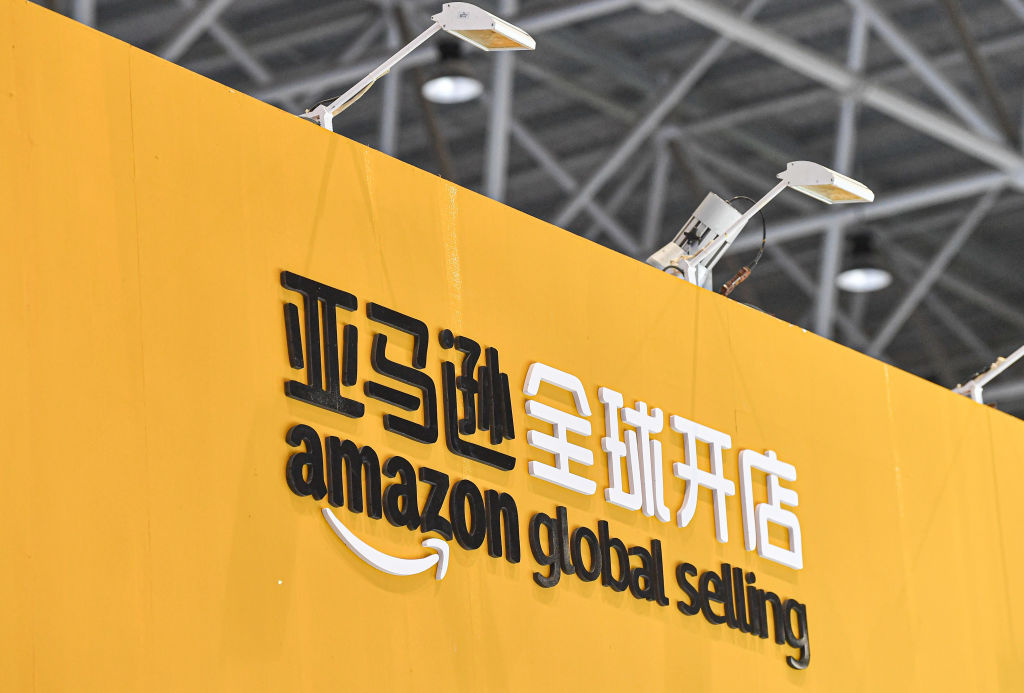
Third-party sellers account for the majority of Amazon sales, with 40 percent of those selling to US customers based in China. (VCG/VCG via Getty Images)
As Amazon has rapidly expanded, those who write about the company have struggled to find the words to convey both the scale and scope of its operations. I often find myself describing Amazon as a country unto itself — or, more precisely, an empire, governed by its own Byzantine standards and laws while evading the laws of the actual countries in which it operates.
There is a ruler — Jeff Bezos, even though he has stepped down as CEO — and there are lesser officials, not just senior vice presidents but fulfillment center managers, human resources employees, and the heads of Amazon’s delivery service partners, which, while legally separate entities, pop up in Amazon’s wake and often exist solely to carry out its delivery needs, the separation so fictitious that many of their drivers wear Amazon-branded uniforms and drive Amazon-branded vans. Whether as employees (“Amazonians,” as the company calls its workers) or customers or somewhere in between, a growing number of us are changed by its rule.
A new report published by the independent research nonprofit Data & Society extends the metaphor. The report concerns Amazon’s third-party seller network, which accounts for the majority of sales that happen on Amazon. Exact numbers are hard to come by, but one analyst estimated that there were roughly six million unique sellers active on Amazon in 2021 and that nearly two thousand new sellers opened accounts every day. Moira Weigel, a professor at Northeastern University, conducted forty interviews with current and former Amazon sellers based in the United States, Singapore, Hong Kong, and China. (While the company has failed to make direct inroads in China, the number of third-party sellers based there has skyrocketed in recent years: roughly 40 percent of the businesses selling to US customers through Amazon are based in China.)