The Anti-Capitalist Origins of the Monopoly Man
The new PBS documentary Ruthless: Monopoly’s Secret History tells the story of how a board game intended to warn Americans about inequality ended up teaching them how to be good little capitalists.
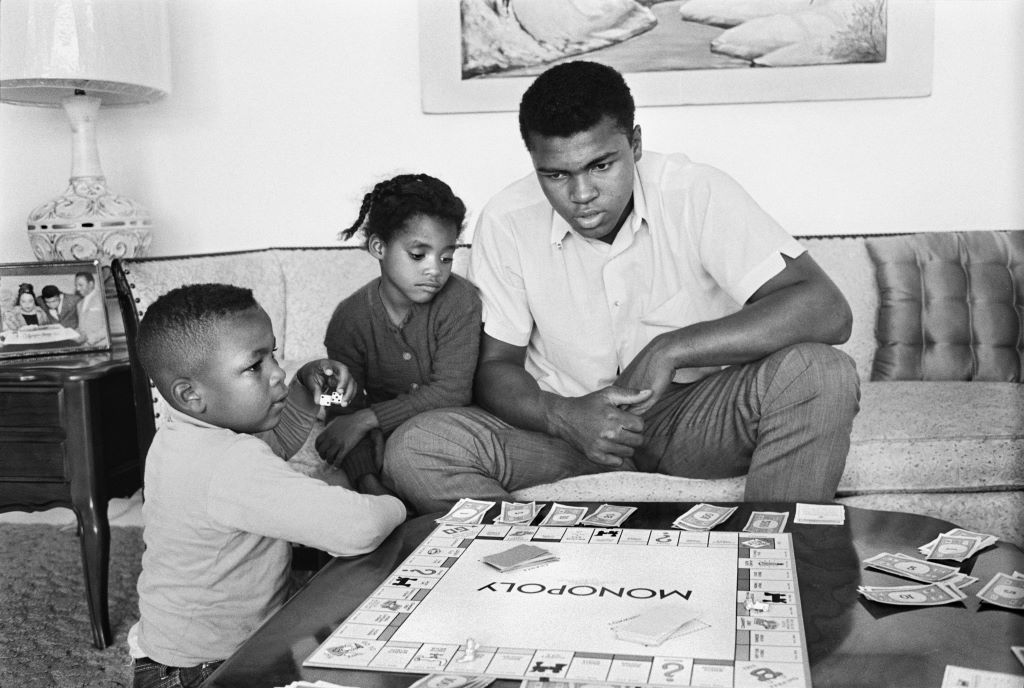
Muhammad Ali and children playing Monopoly at home. (Steve Schapiro / Corbis via Getty Images)
“The ideas of the ruling class are in every epoch the ruling ideas.” Theoreticians have applied Marx and Engels’s concept to analyses of literature, theater, cinema, academia, punditry, and more. But who would have thought that the same framework could also be brought to bear on the most popular board game in history?
In Ruthless: Monopoly’s Secret History, writer/director Stephen Ives not only explores what the game Monopoly tells us about our economic system, but takes us behind the scenes to reveal its surprising origins as a piece of political agitprop, chronicling the courageous, real-world trustbuster behind the game who challenged and exposed the United States’ corporate behemoth in a David versus Goliath courtroom struggle of epic proportions.
Ives’ other American Experience documentaries for PBS include 2003’s Seabiscuit and 2019’s Roads to Memphis, about the shadowy life of James Earl Ray and his fateful collision with Martin Luther King. In the late 1990s Ives also made the mammoth series The West, which was executive produced by Ken Burns, with whom Ives shared an Emmy for 1990’s The Civil War.