Nazism’s Political Victims Should Never Be Forgotten
Hitler’s forces killed almost a million civilians because of their political affiliation — most of them socialists and communists. Yet official commemoration in Germany and beyond rarely grants proper recognition to the Nazi mass murder of worker-militants.
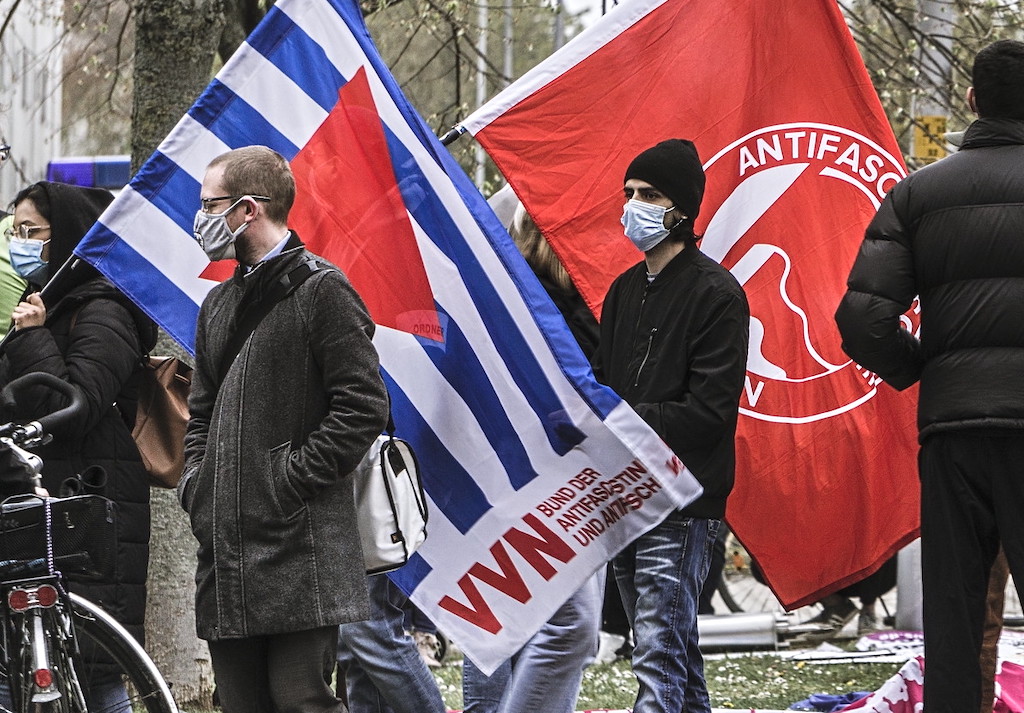
Supporters of the VVN-BdA gather in Frankfurt, 2021. (@7C0 / Flickr)
For over two years, the charitable status of Germany’s main association commemorating the political victims of Nazism has been in limbo. In fall 2019, the Association of Persecutees of the Nazi Regime/Federation of Antifascists (VVN-BdA) received notification from Berlin authorities that it would lose its tax exemptions on the grounds that it had been ruled a “left-wing extremist” organization. The move against the VVN-BdA — one of Germany’s most important groups for Holocaust victims — is currently suspended.
This characterization of the association, which cultivates the memory of the Nazi regime’s mainly Communist and Social-Democratic political victims, is owed to the Bavarian Office for the Protection of the Constitution, based in a region that was itself the cradle of Nazism. It follows in an inglorious history of postwar intelligence agencies harassing Communist members of the anti-fascist resistance — as well as a wider denial of the recognition and welfare accorded to others who suffered and fought the Nazi menace.
This is not simply a German phenomenon. In the Netherlands, Communists were expelled from the association for ex-political prisoners, while commemorations honoring partisan Hannie Schaft were prohibited by armed force, even with the use of tanks.