The Nazis Weren’t Socialists — They Were Hypercapitalists
Right-wingers love to insist that members of Adolf Hitler’s party were socialists. But Nazism’s real economic policies upheld hypercapitalist principles rooted in social Darwinist ideas about the value of human life. They weren’t socialists at all.
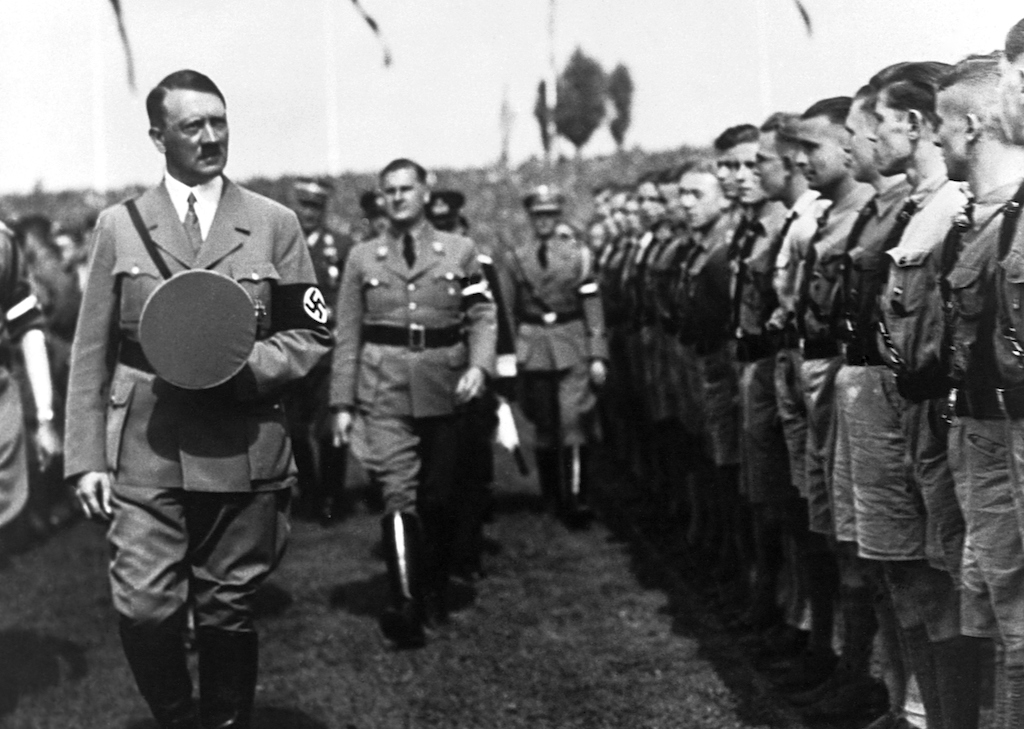
Adolf Hitler inspects a formation of the Hitler Youth in Nazi Germany, ca. 1927–45. (CORBIS / Getty Images)
One of the most tiresome arguments leveled against socialism claims that Nazism was somehow “socialist,” and so something the Left needs to answer for. Adolf Hitler’s men marshaled the economy for war, put the state above the individual — and, as the killer argument, they even called themselves “National Socialists.”
Checkmate? Not quite. Even aside from the fact that other conservative and liberal parties actually voted for full powers to Hitler in 1933, his regime was characterized by massive interventions to help out private business. And the social Darwinism championed by the Nazis, counting the “unproductive” as mere wasteful expense, obeyed the logic of judging human life by the yardstick of profit.
In 2009, Israeli historian Ishay Landa published the book The Apprentice’s Sorcerer: Liberal Tradition and Fascism, an extensive study of the economic and social interests the Nazis really pursued. In this interview with Jacobin, he explains what the term “socialism” meant to Hitler, how his political and economic views were connected — and why we can see the dangers of economic liberalism in Elon Musk today.