Striking Food Delivery Workers in Russia Take on Tech Giant Yandex
In Russia, mounting authoritarianism and the wartime crackdown on dissent have hobbled trade unions. A five-day strike by food couriers showed that at least some workers are refusing to be muzzled.
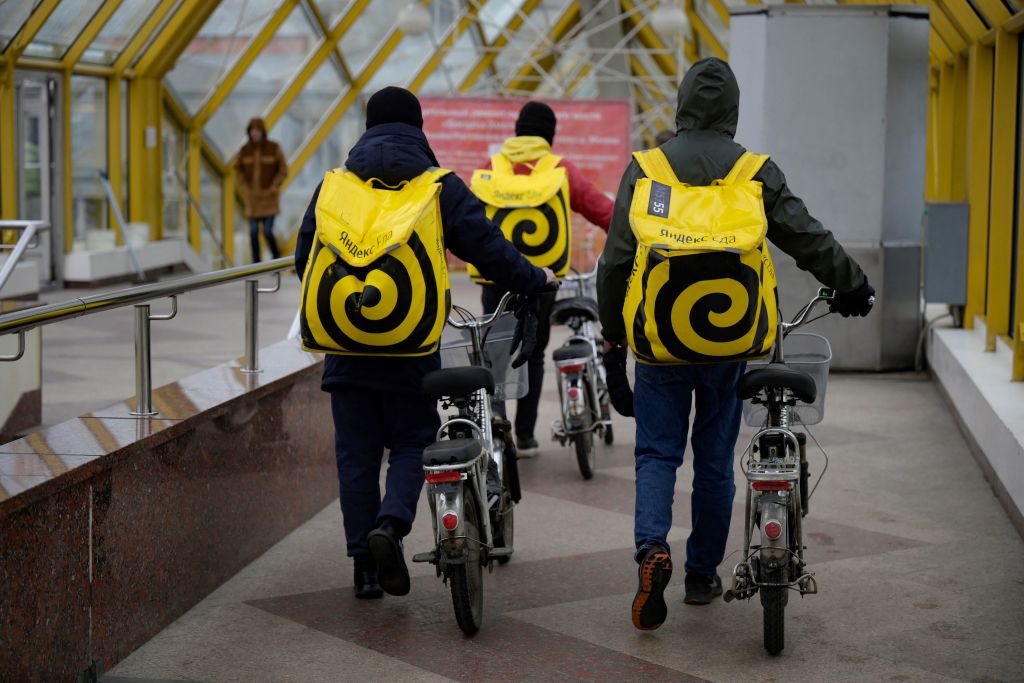
Yandex.Eats food delivery couriers push their scooters along a pedestrian bridge in Moscow on April 30, 2021. (Natalia Kolesnikova / AFP via Getty Images)
In the latest episode of their growing union drive, food delivery workers across Russia staged a five-day strike on December 20–25. According to the Courier trade union, which organized the action, around 3,800 delivery workers in more than fifteen cities participated in the strike. Workers leveled their demands at Russia’s tech giant Yandex, whose food delivery service, Yandex.Eats, secured a virtual monopoly over the country’s food delivery market after acquiring its main competitor, Delivery Club, in September.
The strike bore similarities to disputes with firms like UberEats and Deliveroo in other European countries. Among the demands made by delivery riders — who are officially self-employed — is the introduction of labor contracts with Yandex, as well as improved wages and working conditions. During the strike, thousands of delivery workers refused to take orders through the Yandex.Eats mobile app, disrupting the service in several cities. The Courier union also called on strikers to “sabotage the work” of restaurants that partner with Yandex by forming lines and blocking cash registers to customers.
Food delivery services in Russia have become hugely popular in recent years, especially in wealthy urban centers like Moscow and Saint Petersburg. Demand increased massively during the pandemic as Russia, one of the worst affected countries, went into lockdown. Before late 2022, three major players competed for the lucrative Moscow market: Delivery Cub, Yandex.Eats, and Sbermarket. Since Yandex’s acquisition of Delivery Club, workers have complained of wage cuts, from 110 rubles, or $1.59, per order to seventy rubles — around one dollar.