British Universities Keep Squeezing Faculty and Students Tighter and Tighter
The UK’s neoliberal university system is pushing more and more faculty into precarious, low-paid positions while charging students ever more exorbitant fees.
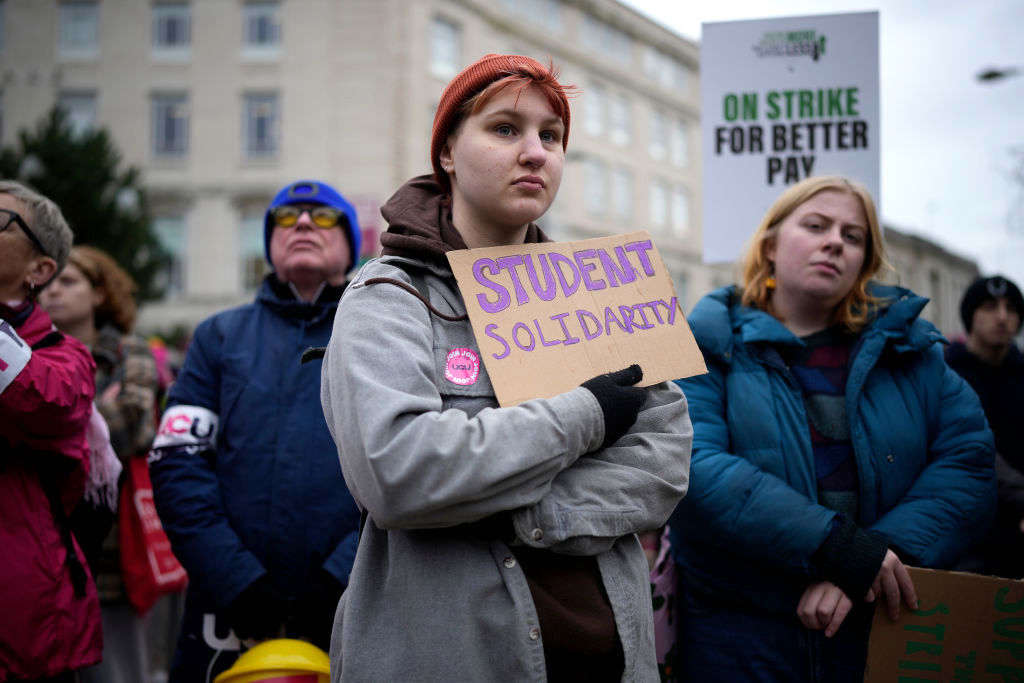
University of Liverpool staff and supporting students take part in a rally as strike action hits universities on November 24, 2022 in Liverpool, England. (Christopher Furlong / Getty Images)
Within the rising tide of industrial action, the University and College Union (UCU) is involved in a prolonged dispute about the pay, pensions, and conditions of its hundred twenty thousand members. I’m one of them. Academics on picket lines may not stir the political blood like posties, railway workers, or nurses, but universities are a multibillion-pound industry. They play a very significant part in the economies of some cities, and beyond their financial value, universities should play an important role in our hopes for a better future.
Sadly, universities have become more interested in developing property than developing minds. They see themselves in a “competitive higher education market place” symbolized by shiny new buildings, of the type the Russell Group of twenty-four universities spent £4.3 billion on between 2014 and 2018. This portfolio often includes direct provision of, or a financial stake in, the enormously lucrative student accommodation sector that now attracts some of the most rapacious real estate companies, like the notorious multinational Blackstone.
Servicing the mortgages on property investments is part of the subtext to the current UCU dispute. Alongside student fees, as with any capitalist enterprise, the source of universities’ revenue is the exploitation of labor.