The Federal Government Has Long Made the Cost of Higher Ed Worse, Not Better
Everyone knows the cost of higher education in America is massive and unsustainable. The federal government has played a key role in inflating college costs — but any president, including Joe Biden, could easily change that while wiping out student debt.
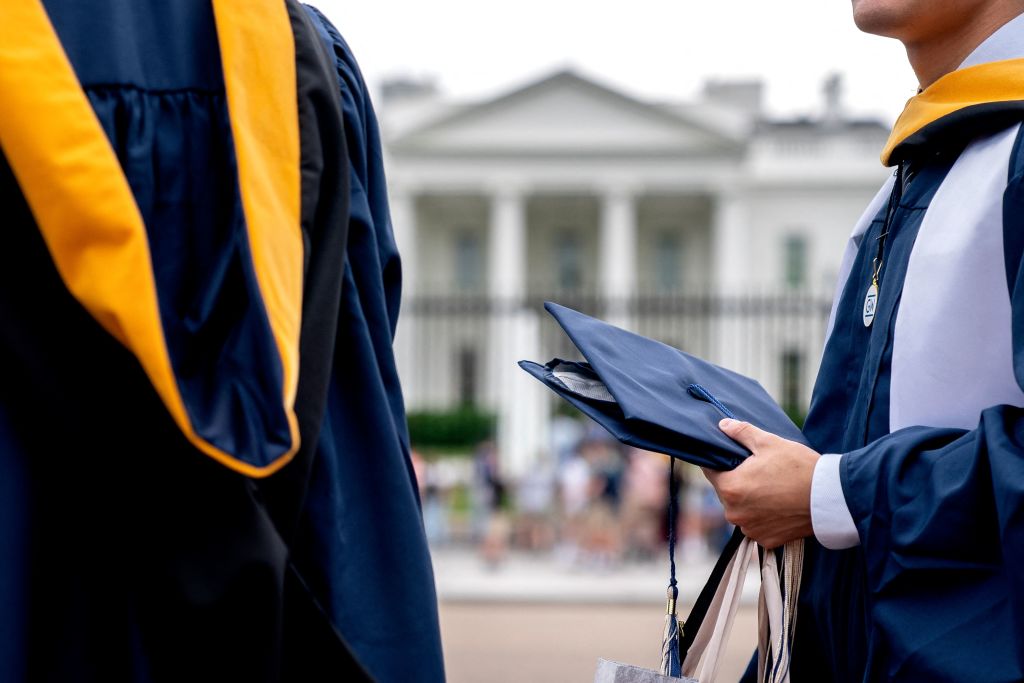
While the federal student debt crisis is relatively recent, the struggle to finance education is not. (Stefani Reynolds / AFP via Getty Images)
Today nearly 45 million people owe $1.9 trillion of student debt. This debt does not impact everyone equally. Two-thirds of all student debt is held by women; the heaviest burdens are held by women of color. Twenty years after graduating, on average, white borrowers have paid off nearly all of their student debt, whereas black borrowers are still stuck with almost the same amount they started with. Yet debt drags down the lives of everyone who has to take it on.
As Representative Ayanna Pressley has said, student debt is more than a policy failure — it is a form of policy violence. Study after study confirms that debt-financed higher education, far from being a great equalizer providing opportunity and access to all, is a severe driver of inequality.
In her new book, Indentured Students, Elizabeth Tandy Shermer, a historian of US capitalism, explores the history of this policy violence. What most of us think of as the student debt crisis only really emerged after the baby boomer generation graduated from college. Shermer reminds us that Americans have always been hungry for more education, but that education has always been more expensive than we could afford. While the federal student debt crisis is relatively recent, the struggle to finance education is not.