The Pale Blue Eye Is So Incoherent, It’s Almost Impressive
There’s a real dearth of Hollywood adaptations of Edgar Allan Poe’s work. Unfortunately, The Pale Blue Eye is far from the film that Poe deserves.
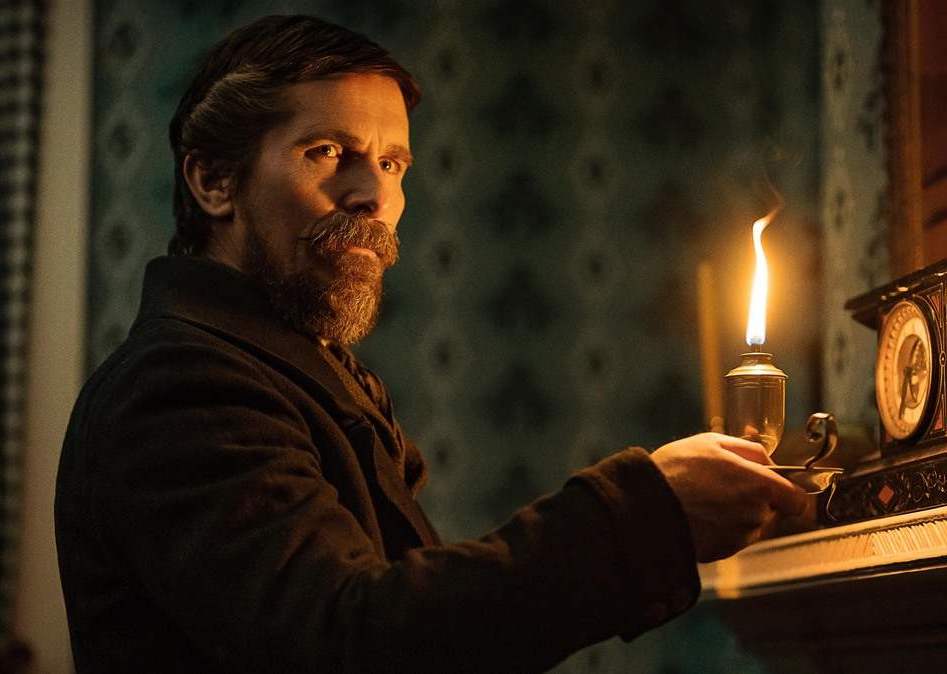
Still of Christian Bale in The Pale Blue Eye. (Netflix)
There’s a new Netflix film called The Pale Blue Eye that starts off promisingly, with nice wintry, Gothic atmosphere, but midway through goes off the rails and plunges over the cliff into such disastrous incoherence, it’s actually kind of interesting to watch. It makes you speculate what writer-director Scott Cooper (Hostiles, Crazy Heart) and star-producer Christian Bale were thinking as they sat through the innumerable screenings that are required in the postproduction process. Were they really viewing this train wreck and giving each other the thumbs up, exclaiming, “Nailed it!”?
It’s a shame, too, because I was really looking forward to the movie, which is based on an Edgar Award–nominated 2013 novel of the same name by Louis Bayard. It’s a murder mystery set at the US Military Academy at West Point in 1830, when young Edgar Allan Poe was, briefly, a cadet there. Poe is played by Harry Melling, an excellent actor whose brilliant performance as the “Wingless Thrush” in the Coen brothers’ The Ballad of Buster Scruggs (2018) convinced Cooper he’d found his Poe. Melling gives a terrific performance as the eccentric, melancholy, alienated, insightful, and already rather dissipated Poe, as he insinuates himself into the investigation of the grisly murder of a fellow cadet, who’s found hanged from a tree on the academy grounds, his heart carved out of his chest.
Drafted to lead the investigation by an arrogant West Point commanding officer (Timothy Spall doing sputtering upper-class arrogance very well), Augustus Landor (Bale) is a retired police detective of some fame who’s also a bereft widower and alcoholic with a mysteriously missing daughter. As he begins to look into the case with considerable reluctance, he’s aided by an eager Poe, who tells him intriguingly that the murderer is a poet, which Poe claims to know “because I happen to be a poet myself.”