America’s Oldest Railway Union Must Break With Its Right-Wing Past
Why does the US government have the power to break massive union strikes like the one that almost broke out on the railroads last November? Part of the story is a history of conciliatory railway unionism. It’s time to break with that legacy.
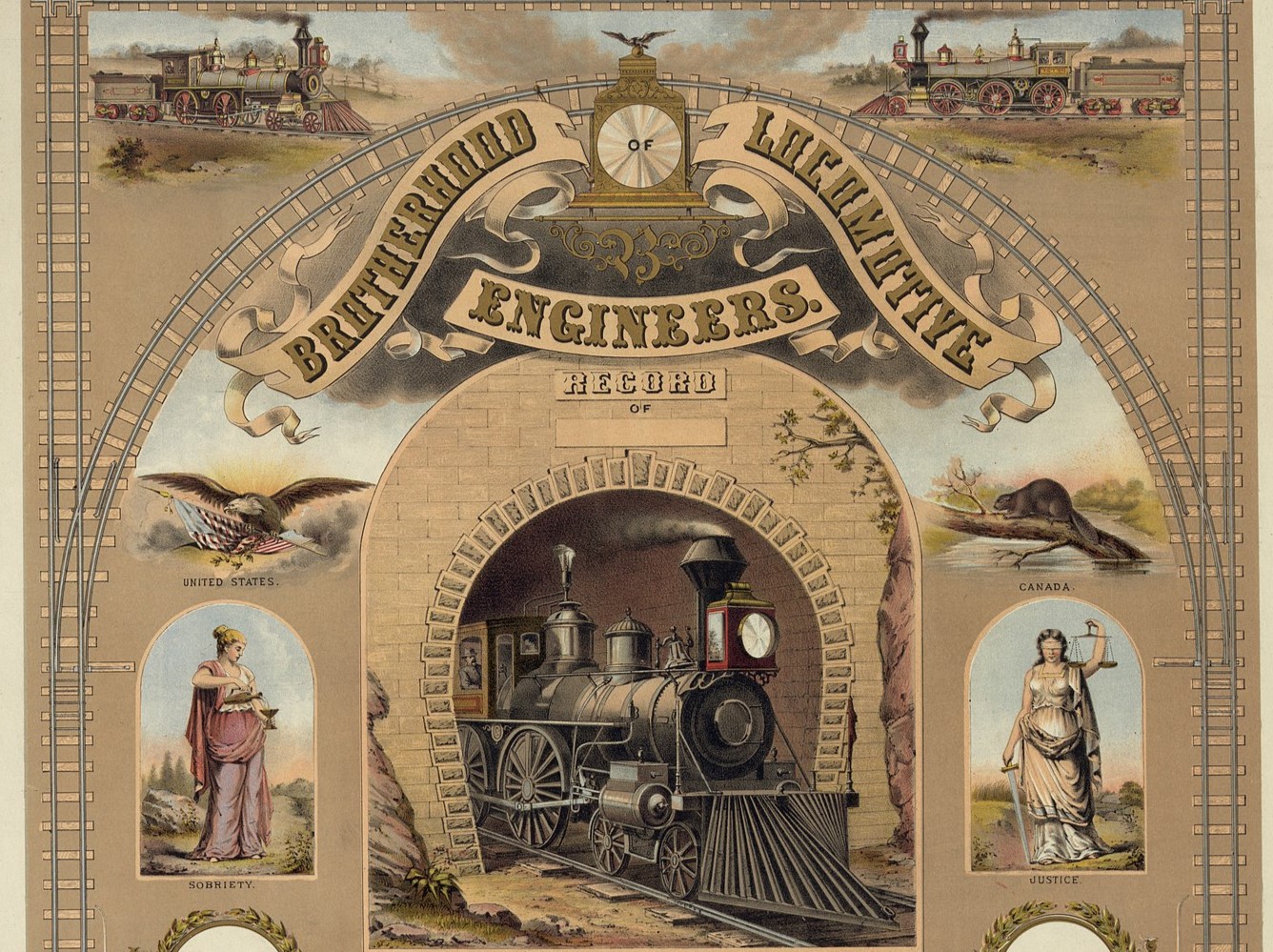
Detail from a Brotherhood of Locomotive Engineers graphic, 1877. (Library of Congress via Wikimedia Commons)
Last November, the Biden administration halted a strike of more than one hundred thousand railway workers following nearly two years of contract negotiations. Then, on December 2, President Biden signed a joint resolution from Congress binding railway workers to an agreement with the railroad corporations — a contract that excluded the core demands made by workers, key among them paid sick leave.
Among the twelve unions participating in negotiations was the Brotherhood of Locomotive Engineers and Trainmen, the longest-standing union of railroad workers in the country. Despite a near unanimous vote in favor of a strike by the union membership in June, its leadership ultimately capitulated. In the subsequent leadership elections, incumbent Dennis Pierce was ousted by Eddie Hall, who won the presidency with 53 percent of the vote.
It’s not the first time the union has acted as a reliable partner of the US government. Under its previous name, the Brotherhood of Locomotive Engineers (BLE), it has played a critical role in shaping the trajectory of the American railroad industry since the mid-nineteenth century.