The New Robert Downey Sr Documentary Is More Annoying Than Avant-Garde
Robert Downey Jr’s documentary tribute to his father, Sr., wants to mimic his dad’s avant-garde filmmaking. But the film lacks coherence, and its subject and filmmaker’s obscene wealth gets in the way of making that case.
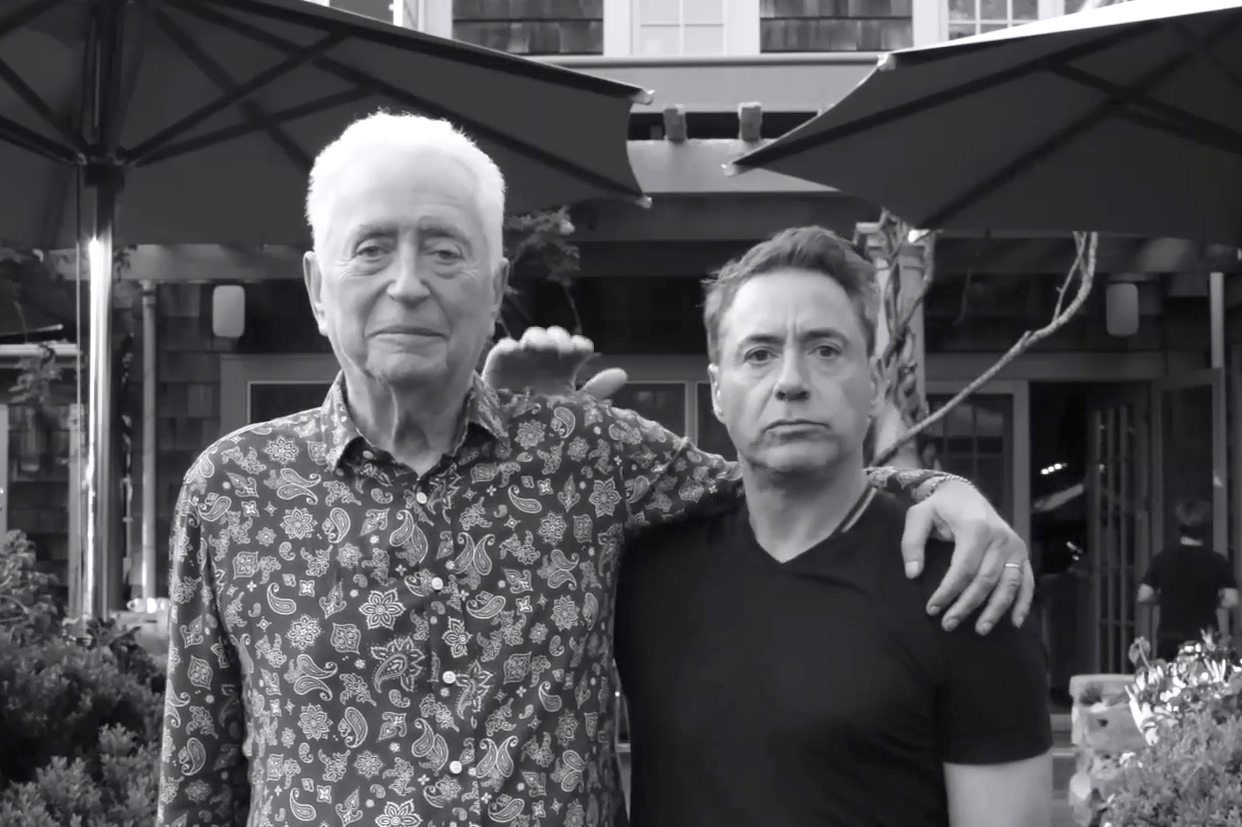
Robert Downey Sr and Robert Downey Jr in the new documentary Sr. (Netflix)
A Netflix documentary about counterculture filmmaker Robert Downey Sr, directed by his much more famous actor son, Sr. charts the last three years of the life of “Bob Sr” before he dies of Parkinson’s disease in 2021 at age eighty-five. Since the content itself is inherently poignant, it’s remarkable how stubbornly uninvolving much of the film is.
Though this makes sense in a way — the documentary is a tribute to Downey Sr as a person and a filmmaker, and Sr’s approach to filmmaking involves a love of offbeat humor and tangential incidents, and a refusal to offer up meaning, structure, or any clear agenda. Personally, Sr. is also eccentric and opaque. His favorite response to the probing questions posed to him throughout the documentary by a seemingly worshipful Robert Downey Jr, who wants to understand his difficult father before he dies, is “Who knows?”
This film is likely to play a lot better for those who are on the wavelength of the avant-garde and underground filmmaking of the 1960s and ’70s. That’s the spiritual home of Sr, whose most famous film is the outrageous, racially incendiary satire of the advertising world, Putney Swope (1969), with its famous poster of a giant hand giving the middle finger and the slogan “Up Madison Avenue.” The film includes interviews with huge admirers of Sr besides his son, who calls what Sr does on film “so next-level.” There’s actor Alan Arkin, and also director Paul Thomas Anderson, a ’60s film fanatic who cast Sr in a bit part in Boogie Nights and named the Don Cheadle character Buck Swope.