Cristina Kirchner’s Conviction Means an Uncertain Future for Argentine Progressives
With her sentencing on corruption charges this month, Argentine vice president Cristina Kirchner has become the latest victim of right-wing “lawfare.” Kirchner has declared she won’t seek public office again — meaning a murky future for her populist movement.
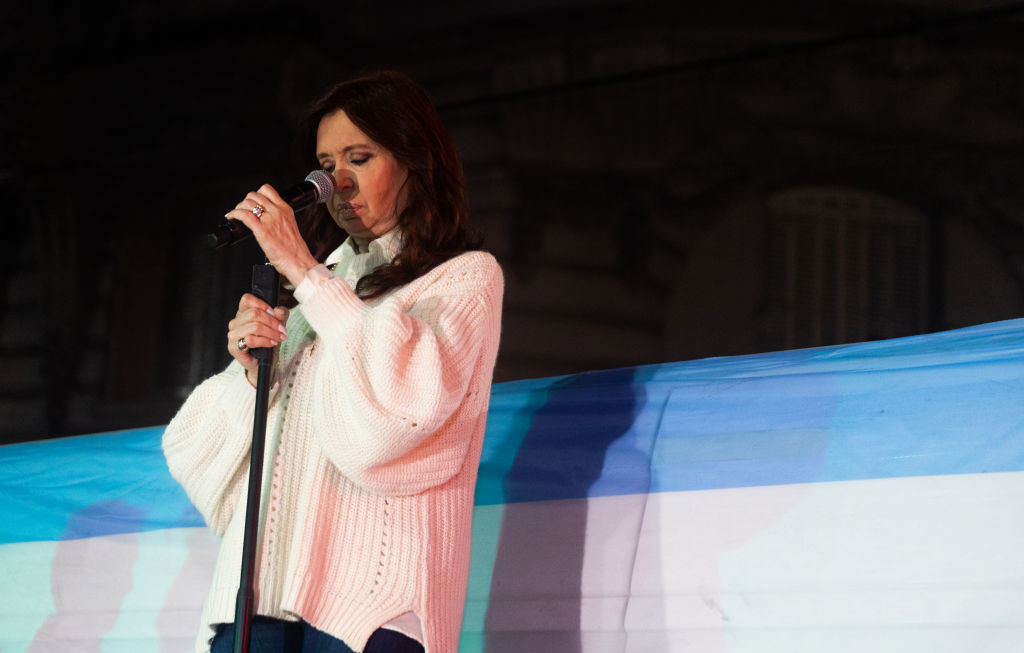
A judicial tribunal sentenced vice president Cristina Kirchner to six years in prison. (Tomas Cuesta / Getty Images)
Earlier this month, Argentina was rocked by a story so big that it broke through the country’s jubilant anxiety over the World Cup — the vice president, Cristina Fernández de Kirchner (or CFK, as she is commonly called in the Argentine press), was found guilty by a judicial tribunal in a massive corruption scandal over money laundering during her term as president from 2007–2015 and sentenced to six years in prison.
The prosecutorial tribunal’s formal verdict is that CFK knowingly funneled over $1 billion to a construction company owned by businessman Lázaro Báez, a friend and ally to her and her husband, former president Néstor Kirchner, during their presidencies. During their leadership of the state of Santa Cruz as well as their presidential terms, Báez laundered more than $55 million from the provincial and federal governments for construction, including for Néstor Kirchner’s mausoleum. Báez is already serving a twelve-year sentence for this scandal, having been convicted in February 2021. CFK’s recent sentencing is an outgrowth of these same investigations.
But CFK isn’t just a politician — she’s the central representative of the populist movement that currently holds the presidency. Her sentencing therefore has massive political ramifications for the people and the politics of Argentina. In her video response to the decision, CFK argued that “they [the tribunal] aren’t coming for me. They’re coming for you.” In other words, CFK is claiming that the scandal is a hoax designed to stymie progressive Peronists and the coalition that holds them together, pointing to connections between the judges who sentenced her and Argentina’s right-wing opposition.