Jeremy Corbyn: Lula’s Victory Is a Testament to Solidarity
Lula’s historic victory in Brazil couldn’t have happened without millions of people fighting for it. Now a left-led government will have the chance to transform their lives and generations to come.
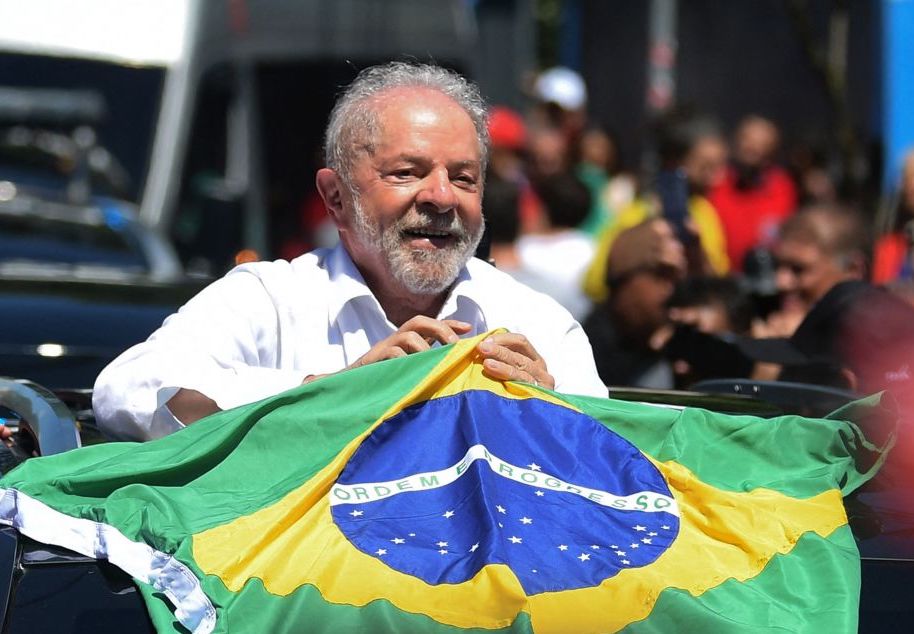
Lula da Silva holds a Brazilian flag while leaving a polling station during the presidential runoff election in São Paulo, Brazil, on October 30, 2022. (Carl de Souza / AFP via Getty Images)
Ediane Maria Nascimento speaks with confidence, not born from grandeur but from gratitude. Wearing a broad smile, and with her arms behind her back, she thanks everybody who has gathered in São Paulo to campaign for Luiz Inácio Lula da Silva in the presidential election. Ediane would have been forgiven for any smugness, since she did what Lula failed to do three weeks earlier: win an election the first time around.
October 2 did not just mark the first round of the presidential election. It marked the general election, in which members of the National Congress and legislative assemblies were running for office right around the country. And it marked the first ever election of a domestic worker to São Paulo’s state legislature. A black woman from the northeastern state of Pernambuco, Ediane had worked as a housemaid her entire life while raising four children on her own. “My mother was domestic, I was domestic. My daughter broke the cycle, and now I broke it too.”
Ediane was one of several women from minority ethnic backgrounds to make history that day. Others included Sônia Guajajara — an Indigenous woman who, like Ediane, successfully ran as a candidate for the Socialism and Liberty Party (PSOL) — and Danieli Balbi — a black transgender woman representing the Communist Party of Brazil. Both PSOL and the Communist Party were two of ten political parties that had coalesced around Lula, including his own Workers’ Party (PT), the Green Party, and the Brazilian Democratic Movement.