Workers Shouldn’t Have to Pay the Costs of the Energy Crisis
Olaf Scholz’s government has announced relief measures to help Germans pay their energy bills. But what they really need is wage rises — and government action that stops gas giants from profiting from this crisis.
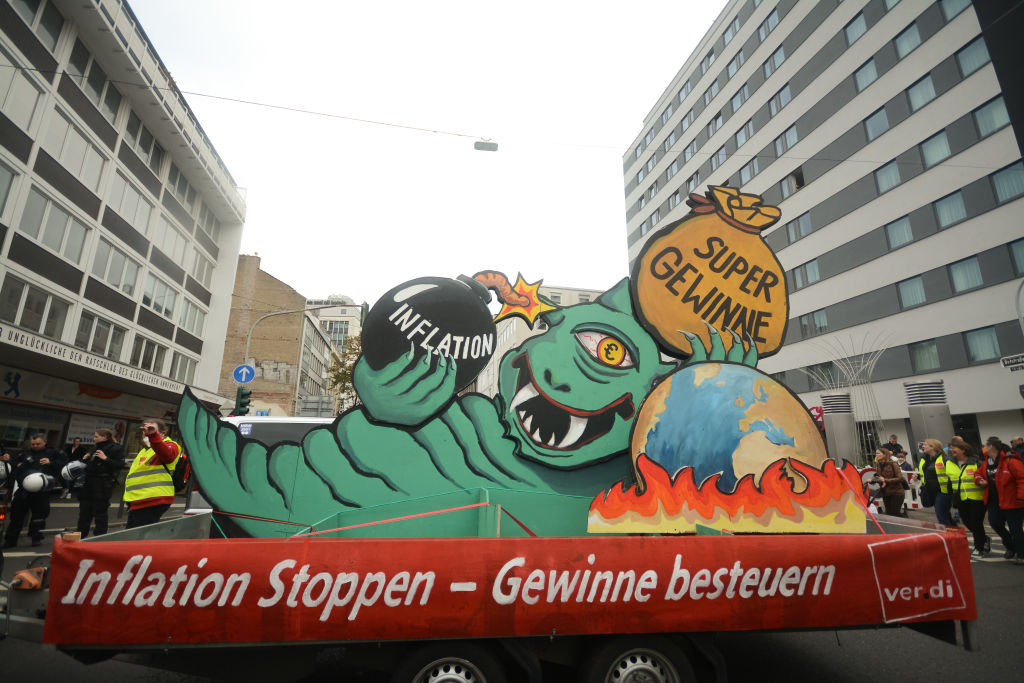
A “stop inflation” carnival float is seen during a nationwide protest in Germany on October 22, 2022, demanding more social relief aid to people and the expansion of renewable energy sources to reduce fossil fuel dependency. (Ying Tang / NurPhoto via Getty Images)
The Russian attack on Ukraine and resulting Western sanctions are leading to rising inflation in Germany. The prices for gas, oil, and electricity are becoming increasingly unaffordable for many workers. The so-called “Gasumlage,” a measure which would have enabled the importers of gas to pass on their rising cost, has been brought down in parliament. Yet many fear that even the cap on energy prices will not stop rising poverty. In addition, a dispute has flared up over a return to nuclear power.
But if there’s a rising pressure on working-class living standards, what can trade unions do about it? One first step was on Saturday, as over twenty thousand people joined protests backed by the German Trade Union Confederation (DGB) in six cities.
Hans-Jürgen Urban is a member of the executive committee of IG Metall, Germany’s largest single union. He spoke to Peter Schadt and Hans Zobel about what the crisis means for workers, in an article for left-wing monthly magazine Konkret.