The 1929 Loray Mill Strike Was a Landmark Working-Class Struggle in the US South
This day in 1929, anti-labor forces in North Carolina killed a millworker and pregnant mother named Ella May Wiggins during the Loray Mill strike. She became a working-class martyr — and a symbol of labor’s fight to democratize the anti-union South.
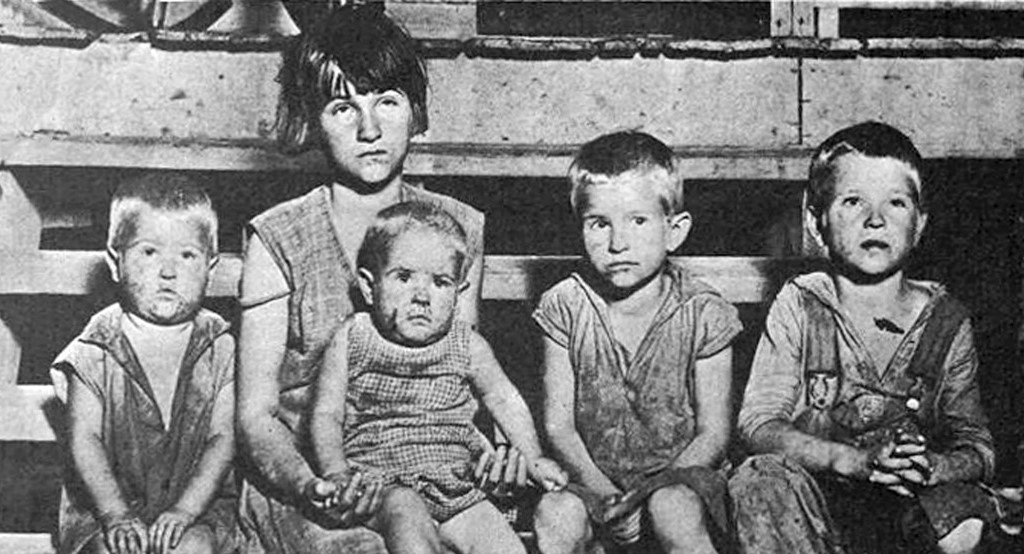
Loray Mill strike organizer and martyr Ella May Wiggins’s children pictured in September 1929 (left to right): Albert, Myrtle holding Charlotte, Millie, and Clyde. (Millican Pictorial History Museum)
A small crowd gathered in the rain at the cemetery on the outskirts of Bessemer City, North Carolina, their feet covered in the red clay mud common in the Piedmont region of the Carolinas. A young millworker named Katy Barnett broke out into song:
We leave our home in the morning,
We kiss our children goodbye,
While we slave for the bosses,
Our children scream and cry.
And when we draw our money,
Our grocery bills to pay,
Not a cent to spend for clothing,
Not a cent to lay away. . . .
Now listen to me, workers,
Both women and men,
We are sure to win our union,
If all would enter in.
I hope this will be a warning,
I hope you will understand,
And help us win our victory,
And lend to us a hand.
It is for our little children,
That seem to us so dear,
But for us nor them, dear workers,
The bosses do not care.
But understand, all workers,
Our union they do fear,
Let’s stand together, workers,
And have a union here.
Most of the mourners were likely familiar with the ballad, known as “Mill Mother’s Lament,” but it held new meaning on this rainy September day. The song’s writer, Ella May Wiggins, lay in the primitive casket below as her children, mostly too young to understand what was going on, innocently placed flowers upon it.