Geoengineering Will Be Part of a Fossil Fuel–Free Future
The carbon removal industry is coming, whether we like it or not. The Left should seize it as an opportunity to articulate and realize a progressive vision for the future — one completely rid of fossil fuels.
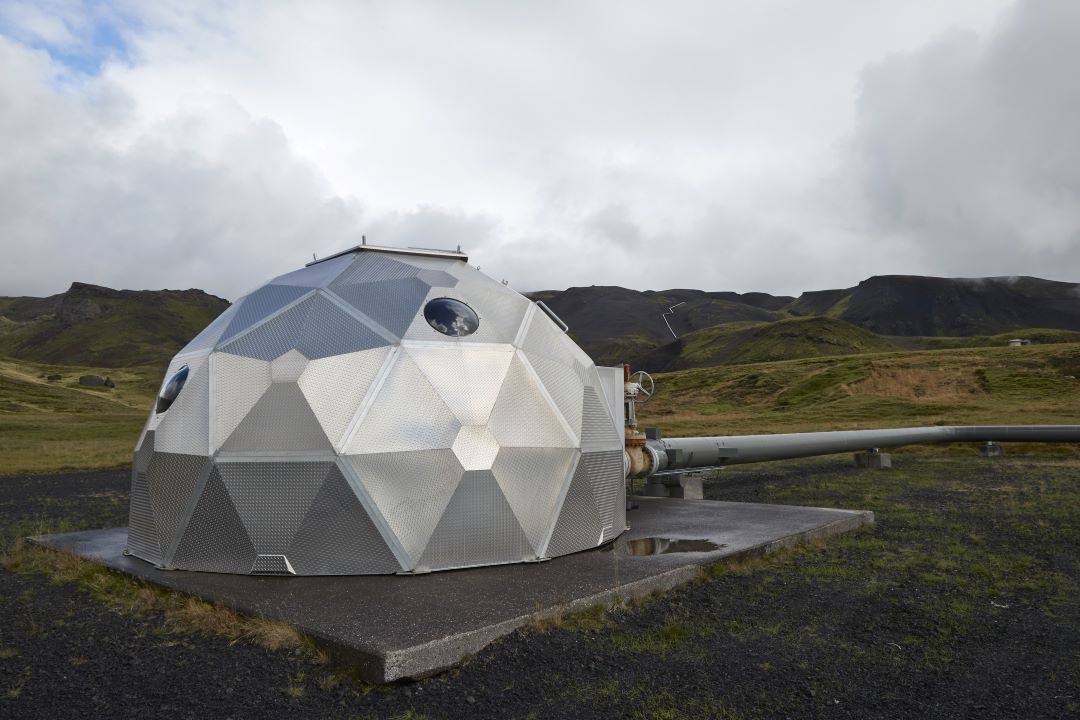
A pod, operated by Carbfix, containing technology for storing carbon dioxide underground, in Hellisheidi, Iceland, on Tuesday, September 7, 2021. (Bloomberg / Getty Images)
For years, commentators on the Left spurned all talk of geoengineering. It’s easy to understand why. Geoengineering, a blanket term that describes large-scale technologies for cooling the planet, evokes the “move fast and break stuff” ethos of Silicon Valley. A quick tour of the latest and greatest in geoengineering technoheroics includes lasers for controlling the weather, deserts retrofitted as solar power plants, and a thousand-mile-long “space parasol” to shade the earth. The world dreamed up by these self-described disruptors is the stuff of leftist nightmares: a venture-capital utopia with no politics, no regulators, and no regard for naysayers. “It’s so easy to save the planet,” as Russ George, an entrepreneur who in 2012 defied regulators by dumping one hundred tons of iron dust into the ocean to seed a giant CO2-sequestering algae bloom, once put it. “You can do it on a 125-year-old wooden schooner, under sail.”
Critics also point to the moral hazard that geoengineering poses: by inventing technologies for cleaning up this mess, aren’t we merely giving fossil fuel companies license to continue in their carbon-emitting ways? Google “carbon capture and storage” — shorthand for industrial-scale technologies for removing carbon at the site of emission and storing it underground — and the first search result is a page for ExxonMobil’s “Energy Factor” project. There you’ll learn about Exxon’s Low Carbon Solutions, a $3-billion division working to bring technologies for carbon capture and storage to a commercial market. Low Carbon Solutions aims to be the corporate boardroom answer to the techno-optimism of Silicon Valley. “I love engineering,” reads a quote from Joe Blommaert, the division’s president. “You get to solve big challenges by combining scientific principles with outside-the-box thinking.”
And then there’s solar geoengineering, the most controversial technology of all. Solar geoengineering involves shooting massive quantities of aerosols into the stratosphere to deflect sunlight and cool the climate. Scientists believe that, among other environmental risks, messing with the sun in this way could permanently disrupt the Asian and African monsoon seasons and lead to catastrophic droughts and food shortages. And if the world ever decided to suddenly stop solar geoengineering, it would run the risk of “termination shock”: a rapid and devastating rise in temperatures. Solar geoengineering also raises a host of seemingly intractable questions about governance and consent. As Naomi Klein wrote in 2012: