The Breakdown of Neoliberal Globalization Is the Root Cause of Britain’s Political Crisis
From Brexit to the Scottish independence movement and growing support for a united Ireland, the British state has been convulsed by the resurgence of nationalism. These crises ultimately stem from the decline of capitalist globalization after 2008’s crash.
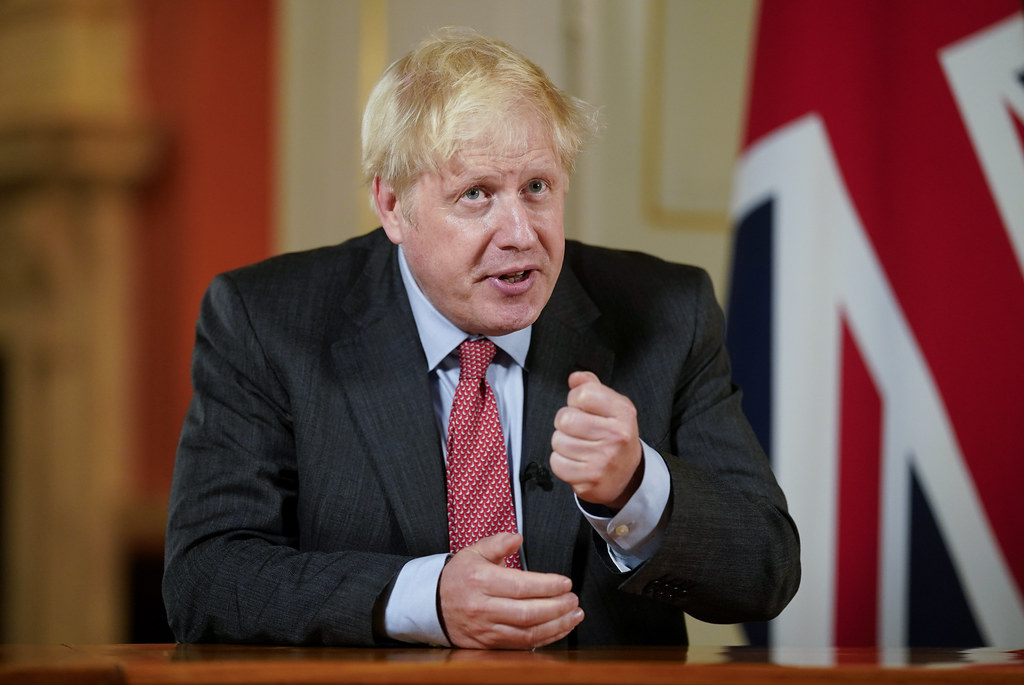
UK prime minister Boris Johnson addresses the nation from the White Room of 10 Downing Street, London, United Kingdom, on September 22, 2020. (Number 10 / Flickr)
Boris Johnson’s resignation as Conservative leader means that the UK will have had four prime ministers from the same party in just over six years. However, this is just one aspect of the multipronged crisis of the UK state in the period since the 2008 financial crash.
While Brexit lies at the center of these convulsions, the rise of Scottish and Irish nationalism at its periphery threatens an even more striking constitutional rupture. Sinn Féin is now the most popular party in both parts of Ireland, north and south, while the Scottish National Party (SNP) has led the Scottish government since 2007, with pro-independence parties taking a majority of seats in three consecutive elections, and now has a popular mandate for a second independence referendum.
Meanwhile, the two main parties of the British state, the Conservatives and Labour, have both been engulfed in civil wars, the former over whether and how to deliver on the Leave vote in the 2016 referendum and the latter over the unexpected leadership of the party by left-wing outsider Jeremy Corbyn from 2015 to 2019. For the Tories at least, the downfall of Johnson shows that the conflicts tearing up Britain’s traditional parties of state are not yet over.