Will Sinn Féin’s Wins Lead to a United Ireland?
Sinn Féin’s victory in Ireland’s recent Assembly elections is the first time a nationalist party has been the largest in Northern Ireland. The win makes a unity referendum more likely than ever.
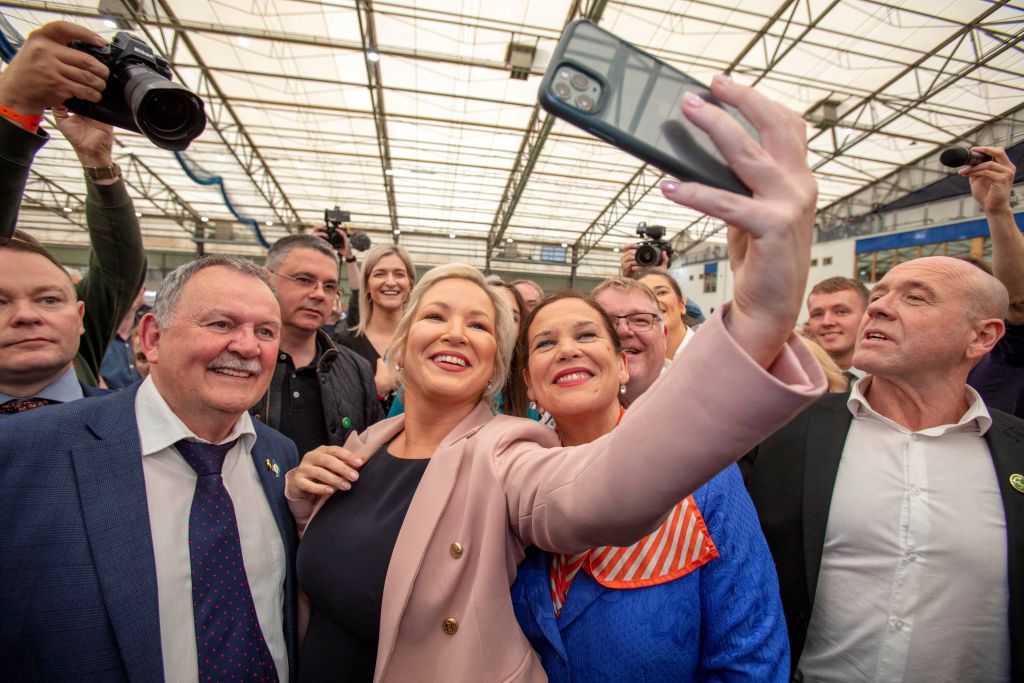
Deputy first minister of Northern Ireland and Irish republican Sinn Féin party member Michelle O’Neill takes a photograph with party president Mary Lou McDonald, May 7, 2022. (Paul Faith / AFP via Getty Images)
Sinn Féin has plenty of reasons to celebrate. The party made history earlier this month, taking 29 percent of the vote in Northern Ireland’s general election, 7.7 percent more than their nearest political rivals, an exasperated Democratic Unionist Party (DUP) whose nativist and sectarian campaign failed to secure victory.
To the south, polls indicate that Sinn Féin is the most popular political party in the Republic of Ireland. With a chance to lead governments in two jurisdictions simultaneously, the face of mainstream Irish republicanism is smiling.
The recent republican triumph in the North wasn’t supposed to happen. As one BBC commentator pointed out, Northern Ireland was “literally designed” to prevent a nationalist victory. Ulster has nine counties, three of which remain in the Irish state. Had they been surrendered at the time of partition, the authoritarian Orange statelet and its “Protestant parliament for a Protestant people” wouldn’t have been possible.