Sri Lankan Trade Unionist Joseph Stalin Explains How the Country’s Government Fell
On July 9, protesters forced Sri Lanka’s president to resign and flee the country. On bail for his alleged involvement in the uprising, Joseph Stalin, general secretary of the Ceylon Teachers’ Union, spoke to Jacobin about the achievements of the movement.
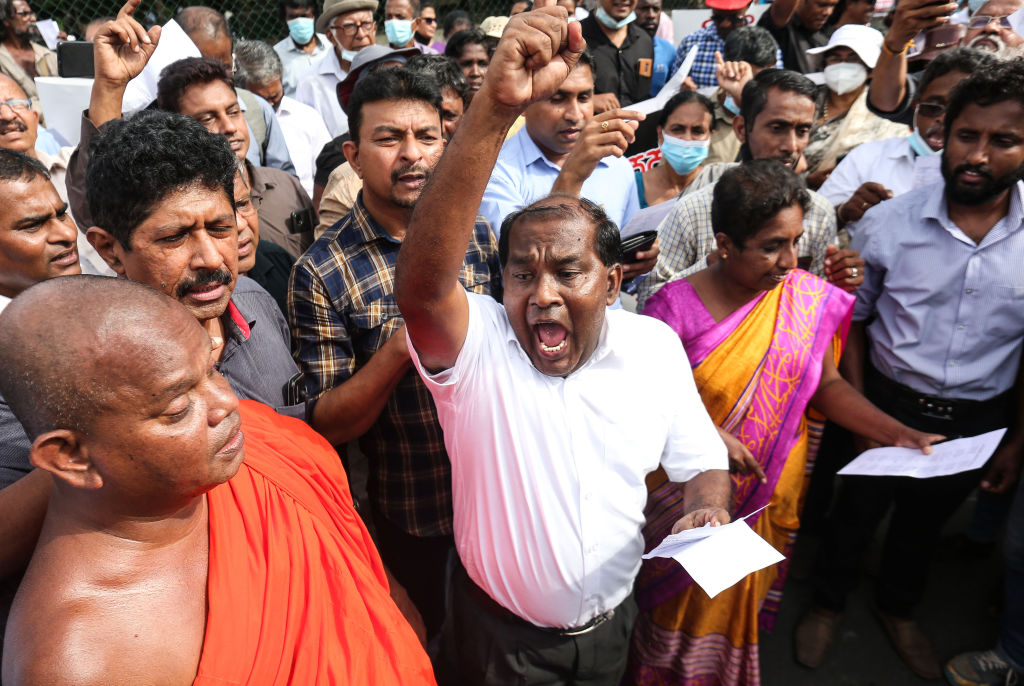
Joseph Stalin (C), leader of the Ceylon Teachers’ Union, protests with activists of the CTU at a demonstration condemning the government in Colombo, Sri Lanka on August 8, 2022. (Pradeep Dambarage / NurPhoto via Getty Images)
On July 9, protesters pushed to the brink by the rising costs of food, fuel, and Sri Lanka’s debt crisis brought the government of Gotabaya Rajapaksa, the country’s president, to its knees, forcing the head of state to resign. In the immediate aftermath, images of protesters swimming in the pool of the presidential palace and running along its hallways flooded the internet.
The collapse of the government and the social upheaval, which forced Rajapaksa to flee the country, was a result of a long wave of popular resistance, to which Sri Lanka’s labor movement contributed. Among the protesters pushing for a more just resolution to the ongoing crisis was the head of the Ceylon Teachers’ Union (CTU), Joseph Stalin, who police arrested earlier this month for involvement in the protests.
The CTU played a massive role in the protests, particularly in the General Strike on April 28 and the more localized strikes on May 6. The former prime minister, Ranil Wickremesinghe, has stepped into the role of president, promising to bring economic and political stability to his country by negotiating a bailout from the International Monetary Fund.