The Struggle for Democracy in Sri Lanka
In the push and pull between authoritarianism and democracy in Sri Lanka, the former has won out more often than not. But the fact that the country is not a full-blown dictatorship today is a testament to a spirit of resistance that can’t be snuffed out.
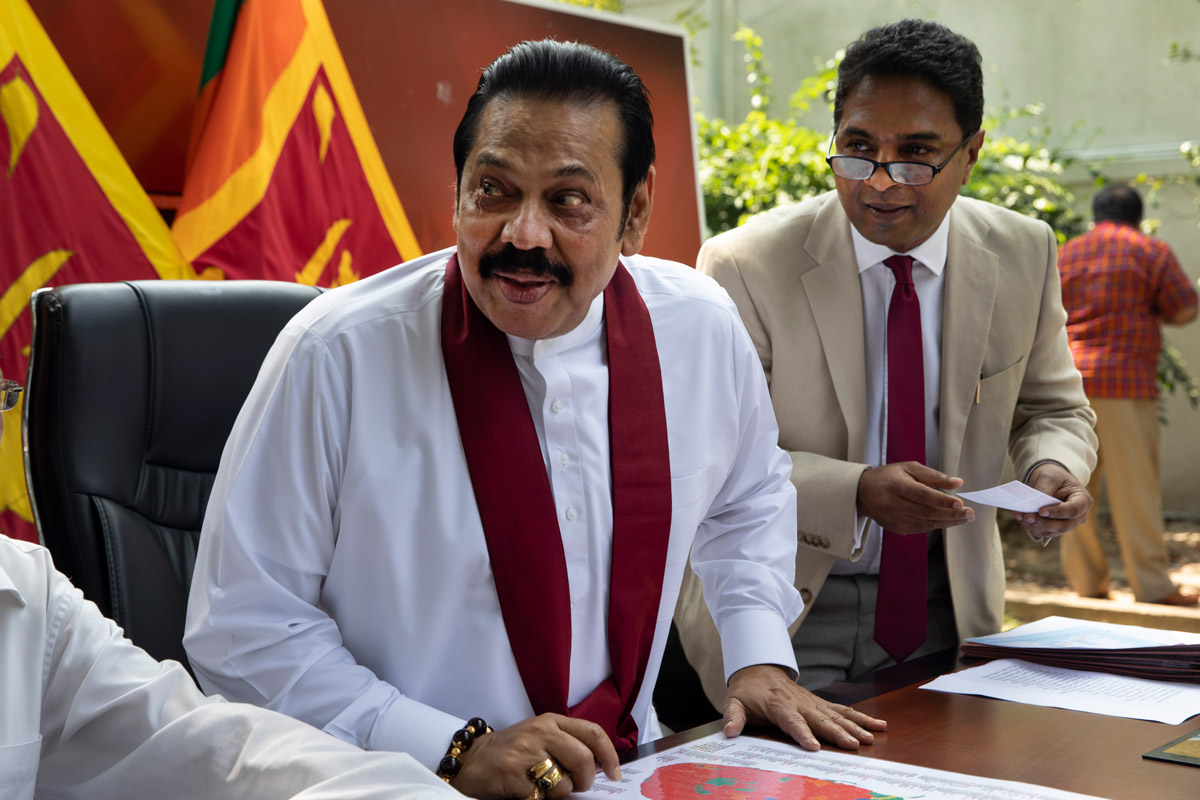
Prime Minister Mahinda Rajapaksa speaks to members of his party and the media as he formally joins the Sri Lanka Podujana Peramuna on November 11, 2018 in Colombo, Sri Lanka. (Paula Bronstein / Getty Images)
The terms “bourgeois democracy” and “bourgeois-democratic revolution” have often been confused by socialists, because they seem to imply that democracy is a gift from the bourgeoisie, is inseparable from capitalism, and has nothing to do with socialism. It is true that in many revolutions against feudalism, absolutism, and imperialism, the mass of working people rise up and inscribe their agenda of freedom, equality, and solidarity on the struggle. But once the bourgeoisie is in power, it sooner or later seeks to roll back these gains, sometimes in extremely brutal ways.
And capitalism can survive for long periods without democracy: there is no intrinsic link between the two. Solidarity in particular is a threat to an insecure bourgeoisie, which therefore encourages divisions; relationships of domination and subordination; and discrimination, exclusion, and persecution targeting particular communities.
In stark contrast with the view that democracy has nothing to do with socialism, Marx and Engels declared in The Communist Manifesto that “the first step in the revolution by the working class is to raise the proletariat to the position of ruling class, to win the battle of democracy”; and Engels later confirmed, “The Communist Manifesto had already proclaimed the winning of universal suffrage, of democracy, as one of the first and most important tasks of the militant proletariat.” Since they believed that the emancipation of the working class would be carried out by the class as a whole, it made sense to affirm that freedom of expression, association, and peaceful assembly; equality before the law and equal protection of the law; and the right to elect representatives of your choice in free and fair elections were needed to prepare workers to take over government and production.