Mario Fiorentini (1918–2022): The Last Partisan
Mario Fiorentini was the last surviving militant of Rome’s Communist-led Gruppi d’Azione Patriottica partisan units. With his passing last night, we lost a powerful witness to the fight against Italian Fascism and German occupation.
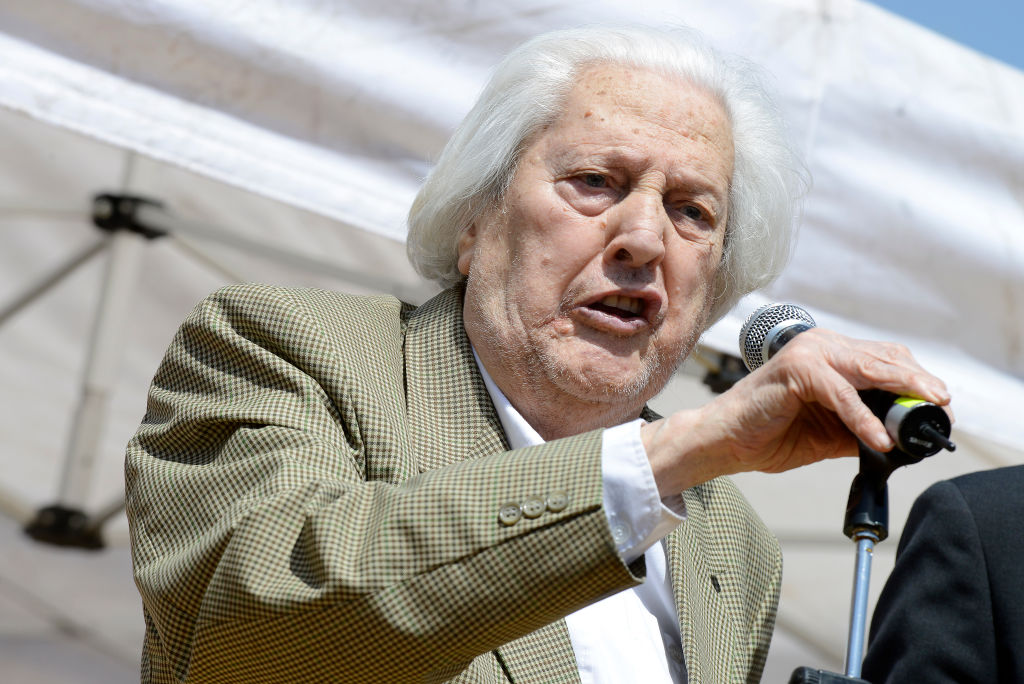
Mario Fiorentini speaking at a demonstration for the 73rd anniversary of liberation from Nazi-Fascism in Rome, Italy, 2018. (Simona Granati / Corbis via Getty Images)
Meeting Mario Fiorentini was a plunge deep into the last century: a man born in the final days of World War I, who fought his most important battles after the Wehrmacht invaded his native Rome on September 8, 1943. He had early in life shown the spirit of rebellion; his father was a nonreligious Jew, and when, in 1938, Benito Mussolini’s regime proclaimed the antisemitic Racial Laws banning “mixed-race” marriages and the employment of Jews in public functions, the young Mario went to a rabbi saying he wanted to convert to Judaism; the cleric warned him against it.
During the German occupation, which also brought the deportation of his parents in the October 16, 1943 Nazi raid against the Jews of Rome, Fiorentini became a leader of the partisan Resistance. He headed the “Antonio Gramsci” unit of the Communist-led Gruppi d’Azione Patriottica (GAP), which carried out many of the most important partisan actions in the city. Faced with Nazi reprisals — and mounting no less than four prison escapes during the twenty months of struggle — he fought both German occupiers and homegrown Fascists, from Rome to the country’s northern reaches.
This autodidact’s early twenties were dominated by the fight for Liberation: he would complete his studies only after the war. He would then become a prominent mathematician, teaching in secondary schools in the outskirts of his home city before becoming professor of geometry at the University of Ferrara. Yet he was also a constant witness to the horrors of Fascism and the fighting spirit of those who resisted it — even in an era when consciousness of the past began to wane.