The Privatization of the Port of Haifa Is a Move to Make Political Allies for Israel
The sell-off of the Port of Haifa looks like a takeover by corporate interests. Yet the acquisition was led by a close ally of Indian premier Narendra Modi — showing its ties to Israel’s strategy of finding autocratic allies abroad.
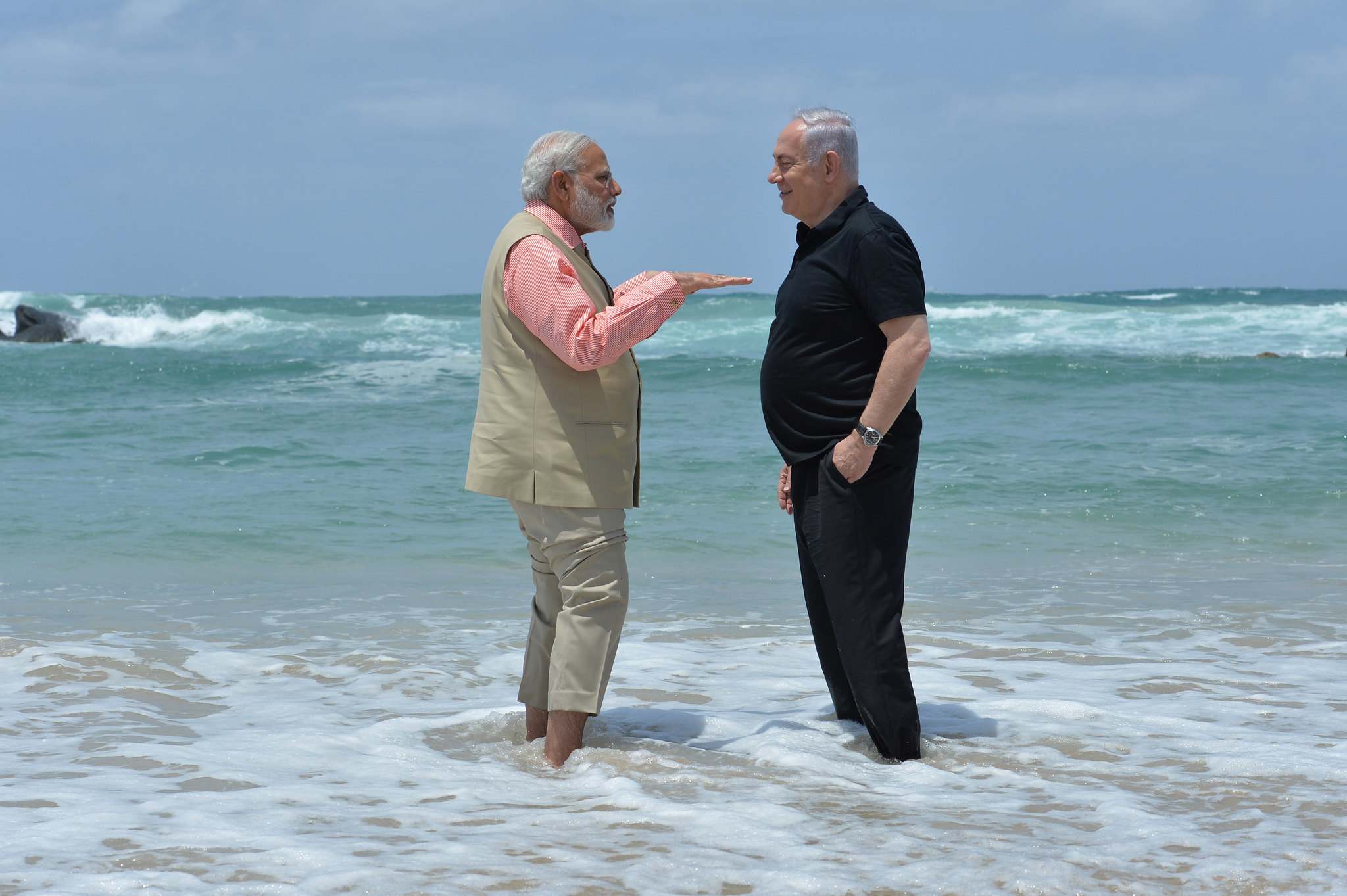
Indian prime minister Narendra Modi and former Israeli prime minister Benjamin Netanyahu at Olga Beach, Israel, on July 6, 2017. (MEAphotogallery / Flickr)
Last month, Israel’s yearslong quest to fully privatize the Port of Haifa came to an end. India’s Adani Ports and Special Economic Zone Ltd (APSEZ) and Israel’s Gadot Group bought the port for a whopping $1.8 billion. The former company, clearly the major player in the deal, holds a 70 percent share. The port represents a key strategic point in Asian-European trade, given its location between the Suez Canal — one of the world’s largest trading thoroughfares, which enables annually “12 percent of global trade and 30 percent of global container traffic . . . transporting over USD $1 trillion worth of goods” — and the rest of the Mediterranean. While much has been said about the global geopolitical implications of this development, it was made possible by — and will have important effects on — Israel’s strategy of normalization and ongoing regional integration.
The deal was in many ways exceptional — and laden with symbolism. Coming in the immediate aftermath of the so-called I2U2 summit, in which the Indian, Israel, Emirati, and US governments pledged “to harness the vibrancy of [their] societies and entrepreneurial spirit to tackle some of the greatest challenges confronting our world, with a particular focus on joint investments and new initiatives in water, energy, transportation, space, health, and food security,” the deal’s political character was writ large. As if to really drive this reality home, the bid that ASPEZ and the Gadot Group put forward was a full 55 percent higher than that of its closest competitor and followed diplomatic pressure from the United States to sideline a Chinese offer.
It is clear, therefore, that far from being a simple economic process of privatization, the takeover of the port is also part of a major strategic vision shared by the countries involved: limiting the influence of China’s Belt and Road Initiative and increasing the economic, military, and political cooperation of US allies in the region as the latter continues the “pivot to Asia” initiated by Barack Obama. Further underlying the intrastate nature of the deal despite its apparent “private sector” character — a tried-and-true approach to limit popular pressure and outrage in recent natural gas export deals between Israel and its neighbors — is the person leading the acquisition: Gautam Adani.