A Walk Through the Rich History of Struggle in Manhattan’s Chinatown
The public history of Manhattan’s Chinatown often exoticizes the neighborhood and its residents. But in its streets and its sweatshops, Chinatown has long been the site of mass struggles by Chinese immigrants.
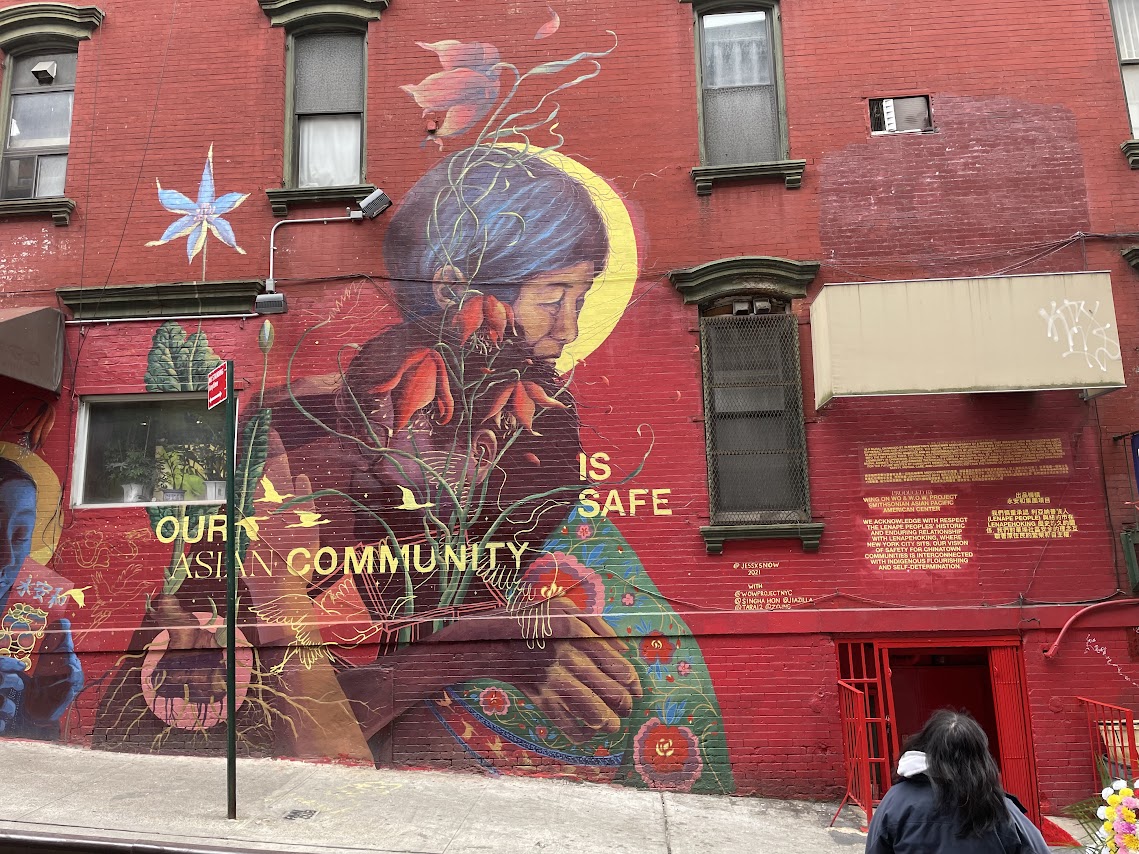
A mural on Mosco Street in Manhattan’s Chinatown by Jess X. Snow, titled In the Future, Our Asian Community Is Safe, which memorializes both distant and recent acts of violence against Asians.
A couple of months ago, standing on the densely packed corner of Doyers and Pell streets, the oldest part of Manhattan’s Chinatown, I stopped for a few minutes to eavesdrop on a walking-tour guide talking to a group of tourists about the “bloody angle,” a bend in the two-hundred-foot-long block in front of the old Chinese Opera House on Doyers Street where Chinese tongs, family-controlled gangs, fought and died over control of gambling, prostitution, and opium in the early 1900s.
The Chinese Exclusion Act of 1882 and other laws made even illegal immigration by all but a few women impossible, leading to an enormous gender imbalance in Chinese communities in the United States and the creation of a bachelor society. That did not begin to change appreciably until the opening of immigration in 1965. Before they became more elaborate, dim sum restaurants, with small plates and communal tables, emerged to serve single men. So did a trade in Chinese sex workers, many of whom were sold into sexual slavery. That was the story this tour guide told.
All true. But the violent and salacious anecdotes the guide chose to tell, standing alone, fit into a narrative of exoticism, giving the impression that the Chinese immigrants were strange and savage. The story he ignored was sitting in plain sight, one that was both more inspiring and complicated in the longer history of Manhattan’s Chinatown. A group of scholars, history professionals, and labor and social justice activists set out to tell that story.