B. J. Novak’s Vengeance Is a Dark Satire of America’s Cultural Divide
Actor B. J. Novak’s impressive directorial debut, Vengeance, sends a Brooklyn writer out to West Texas in order to turn a family’s grief into a podcast. It's a satire that nails our era like no other.
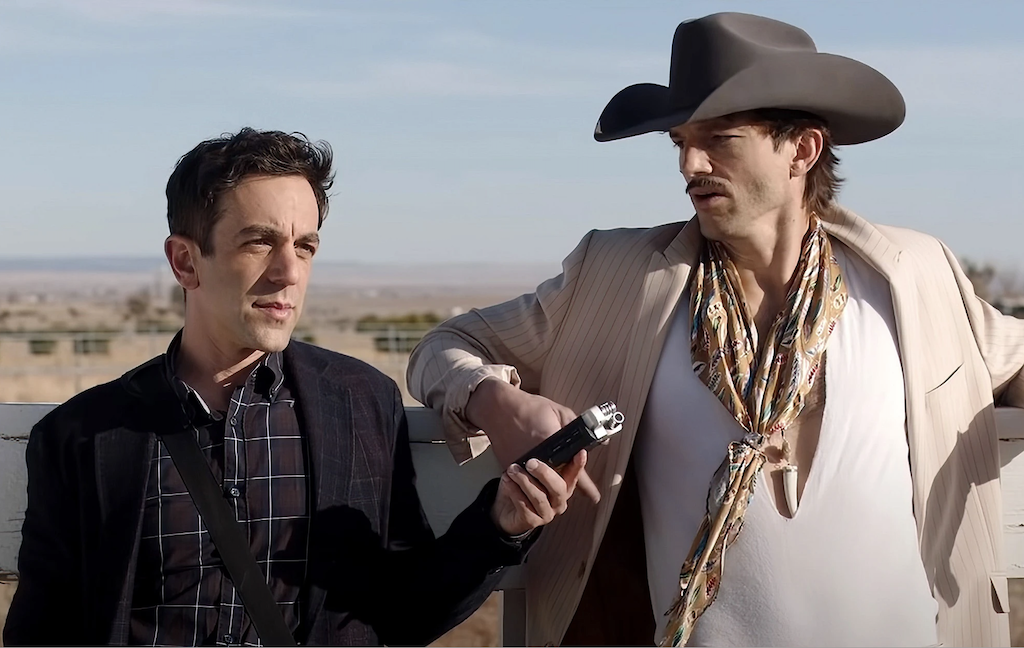
Still of B. J. Novak and Ashton Kutcher in Vengence. (Focus Features)
B. J. Novak, most famous for cowriting and acting in the long-running comedy series The Office, is making his screenwriter-director-leading man debut with the Blumhouse-produced film Vengeance. I enjoyed it, mostly. But I should note that I was tired, and seeking mild amusement, and still preoccupied with the extraordinary impact of Jordan Peele’s new film, Nope, which was playing at the same theater. Everyone in line was going to see Nope, so I had what amounted to a private screening.
Vengeance starts out as a seemingly low-stakes dark comedy about an experience of extreme New York vs. Texas culture clash. The film opens on two media-world douchebags at a party — Novak playing Brooklyn-based writer for the New Yorker Ben Manalowitz, and Novak’s real-life pal John Mayer as his friend — endlessly checking their phones and talking over each other. The topic of conversation is the way their lack of commitment to anyone or anything is actually an admirable way to maximize the glorious possibilities of life. It’s an exchange ironically punctuated by their repeated use of the phrase “one hundred percent,” indicating total, all-in affirmation.
What follows is the story of how Ben gets arm-twisted into spending time in remote West Texas after one of several young women he was hooking up with dies of an apparent overdose, and her grief-stricken brother Ty Shaw (Boyd Holbrook), assuming Ben was her boyfriend, guilts him into attending her funeral.