The Strenuous Comedy of Thor: Love and Thunder
Taika Waititi’s second Thor film doubles down on his trademark mix of silliness and somberness. It still works — but it might not survive another sequel.
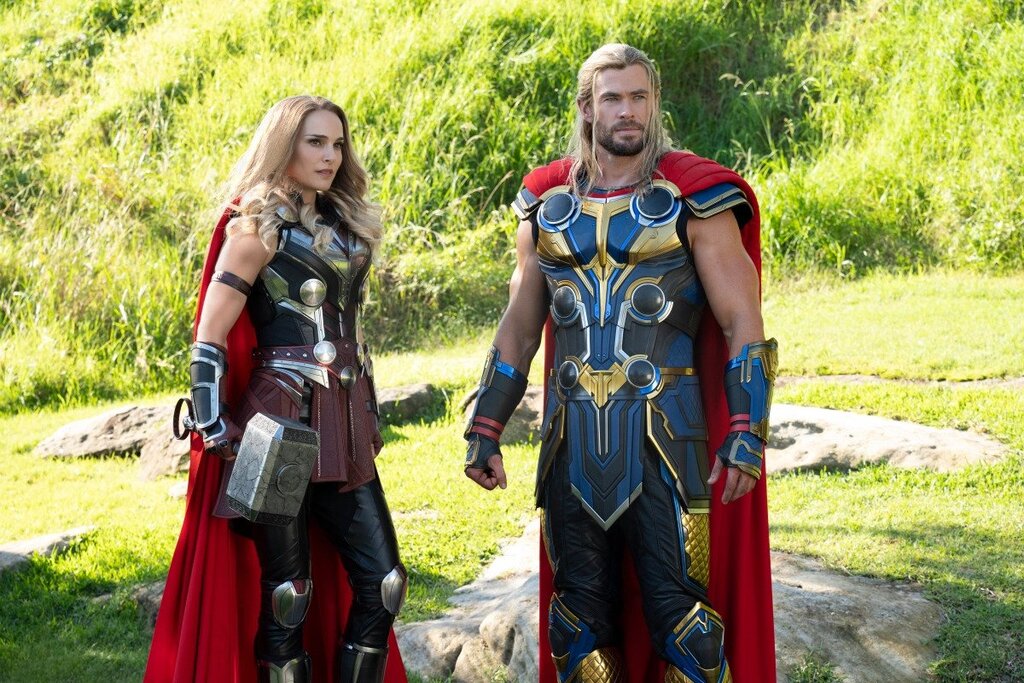
Natalie Portman and Chris Hemsworth star in Thor: Love and Thunder. (Walt Disney Studios)
Taika Waititi is so busy setting a tone of burbling silliness in Thor: Love and Thunder that it makes this Marvel Cinematic Universe sequel seem very much made for children. This would be a welcome trend if only children would once again become the main audience for this stuff and everyone else would act like adults and pay to see grown-up movies. Candy colors dominate the production, and the narrative is presented as a whimsical tall tale told by cheerful stone-warrior sidekick Korg (Waititi) celebrating the adventures of Thor and his fellow galaxy guardians, who are “fighting the good fight for those who can’t fight good.” It’s the most successful Thor movie opening yet.
Waititi is following up on his profitable effort to bring larky humor to the Marvel Universe in Thor: Ragnarok (2017), which intertwined silliness and somberness. The serious strains continue in Thor: Love and Thunder, beginning with the villain’s backstory, showing us how Gorr the God Butcher (Christian Bale) got his fully justified grudge against the do-nothing gods and took possession of the god-slaying sword:
“The sword chose you. You are now cursed.”
“That’s funny, it doesn’t feel like a curse.”