20 Years Later, The Wire Is Still a Cutting Critique of American Capitalism
The first season of The Wire began 20 years ago this month. It remains one of this century's great television shows — both stylish and smart, with unforgettable characters woven into a striking portrait of the depredations of capitalism in one US city.
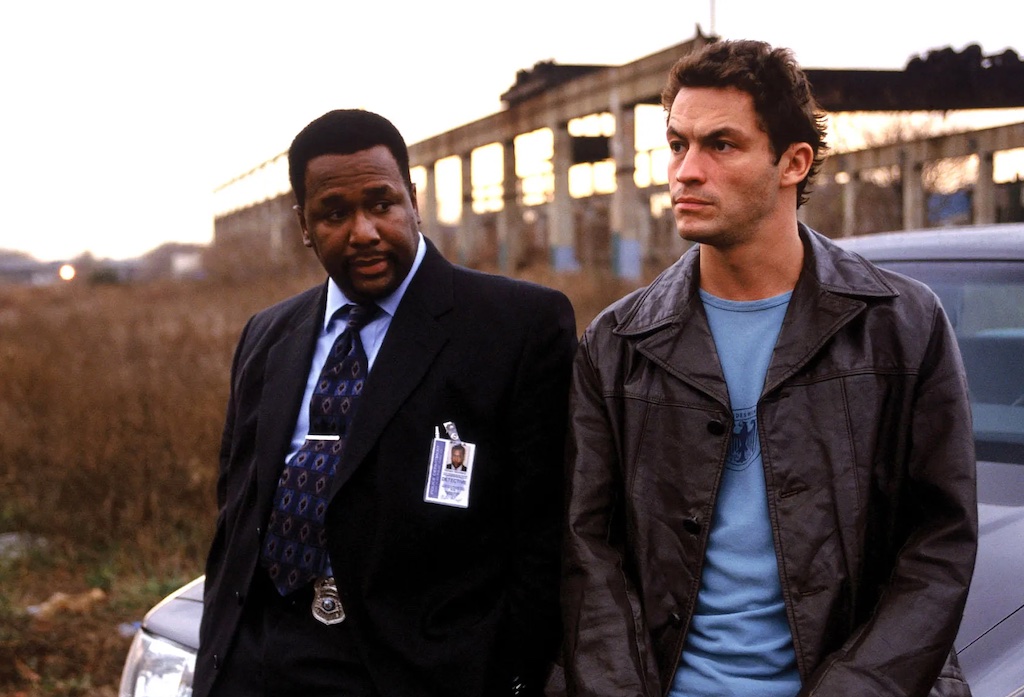
Still from The Wire. (HBO)
Considered by many to be the best television drama series ever, The Wire ran from June 2, 2002, to March 9, 2008. Made and set in Baltimore, it employed a large ensemble cast playing cops, junkies, dealers, lawyers, judges, dockers, prostitutes, prisoners, teachers, students, politicians, and journalists. The dramatis personae ranged widely, not only horizontally but vertically, from the foot soldiers of the drug trade, police department, school system, and newspapers through middle management to the higher executives, showing parallel problems and choices pervading the whole society.
But summing up its plot does not tell the full story. As the series progressed, The Wire’s individual stories opened out into an analysis of an overarching, and at times irresistible, system shaping each aspect of society. The series demonstrated the potential of television narrative to dramatize the nature of the social order, a potential that TV drama has long neglected or inadequately pursued.
Each season ended with a stirring montage that pulls together the various plots and projects them into the immediate future, leaving the viewer pondering the story lines’ outcomes and reflecting on their causes and consequences. And off-screen, The Wire’s writers provided a rich context to its intentions and message, a meta-narrative that situates the series within twenty-first-century American capitalism. In many ways, The Wire is a Marxist’s idea of what TV drama should be — stylish and intellectually serious, a series with compelling plotlines woven through a rigorous analysis of society.