Nonpolice Public Safety Alternatives Work. Denver’s STAR Program Proves It.
Denver’s STAR program sends paramedics and behavioral health clinicians instead of police to respond to 911 calls related to mental health issues, homelessness, and substance abuse. It’s led to a 34 percent drop in crime in its operating districts since 2020.
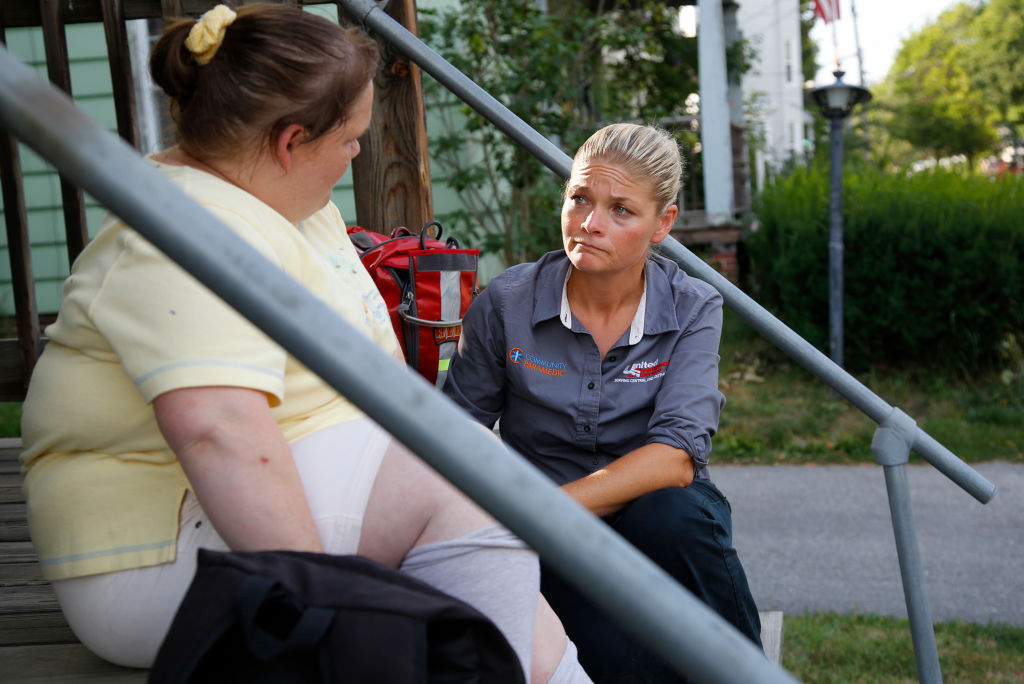
For people struggling with mental health issues and substance abuse, a new nonpolice public safety program in Colorado is sending behavior health clinicians in place of police. (Derek Davis / Portland Portland Press Herald via Getty Images)
The recent recall of San Francisco’s progressive district attorney Chesa Boudin has refueled a media narrative that the Left’s approach to community safety — namely defunding the police to fund nonpolice first-response alternatives and broader stabilizing social programs — is unpopular and ineffective. As the nation reels from the massacre in Uvalde, Texas, Boudin’s recall has been rolled into a larger conversation on how America deals with crime. Unfortunately but not surprisingly, both the media and politicians have used these opportunities to critique the Left’s demands to end over-policing, with many even calling for increased policing.
But while “more cops equals safer streets” advocates ignore the age-old adage about “the definition of insanity,” STAR — a new behavioral health unit in Denver, Colorado — is proving the potential of nonpolice emergency response units. And while it serves as its primary goal of making Denver safer, STAR also functions as a crucial proof point for the Left. The Denver program is not hypothetical: it’s real, and it demonstrates that our proposed policies are safe, feasible, and effective.
Denver’s STAR Program
Denver’s Support Team Assisted Response (STAR) is a unit of EMTs and behavioral health clinicians that responds to 911 calls involving “individuals experiencing crises related to mental health issues, poverty, homelessness, and substance abuse.” The program began in 2020 with just a two-person staff and a single van. But from humble beginnings and despite limited resources, STAR has delivered promising results.