In El Salvador, Bitcoin and the Police State Have Gone Hand in Hand
Mario Gómez is one of El Salvador’s most prominent critics of the government’s recent embrace of Bitcoin — which may explain why he was recently arrested by Salvadoran police, he told Jacobin in an interview.
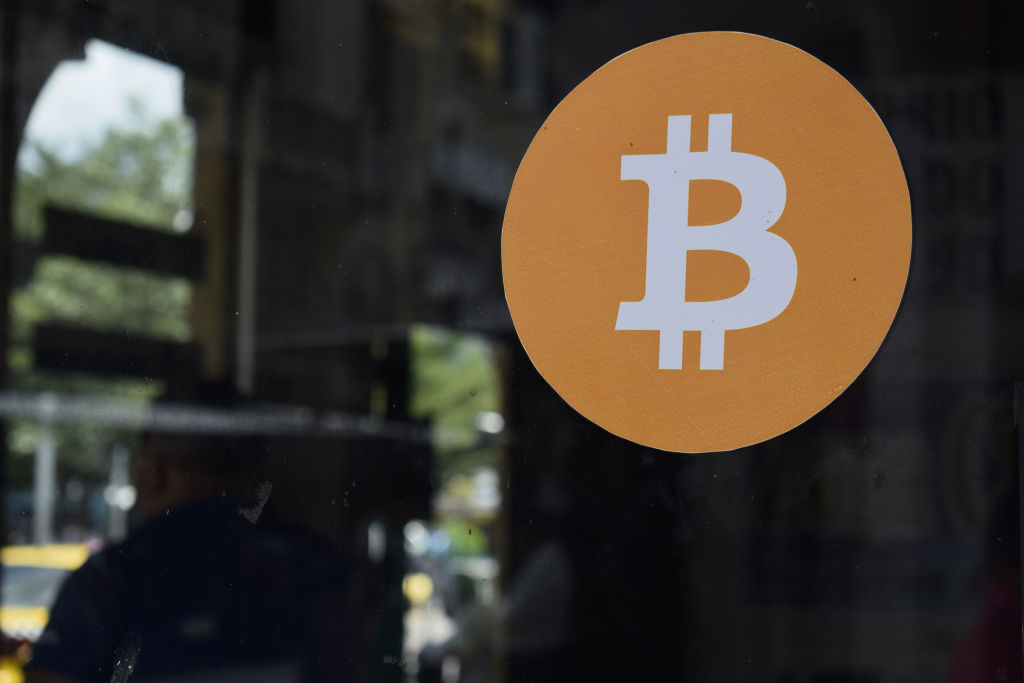
A Bitcoin sign announces the acceptance of the cryptocurrency in San Salvador, June 22, 2022. (Kellys Portillo / APHOTOGRAFIA via Getty Images)
On September 1, 2021, on the eve of the implementation of a law that would impose Bitcoin as legal tender in El Salvador, the police arrested Mario Gómez, a thirty-six-year-old software developer and leading critic of the new legislation. Today, Bitcoin has lost over 50 percent of its value, martial law reigns in El Salvador, and Mario Gómez is processing his asylum request in the United States.
From exile, Gómez remains one of the most informed and critical voices speaking out against the authoritarianism of President Nayib Bukele and his experimental economic policies. In this interview with Jacobin contributing editor Hilary Goodfriend, Gómez discusses his political persecution, the contradictions of bitcoinization in El Salvador, and the implications of the recent crypto market crash.
Hilary Goodfriend
To start out, tell us about your arrest, and how you ended up in the United States.
Mario Gómez